

Our seven nights on the Disney Treasure were a bit of a whirlwind, and in this review I’ll take you through the highs and lows to reveal how the bones of the ship and the heart of the experiences reflect both the best and worst of what Disney can do. (For a more specific look at our time aboard the ship with commentary on most everything we did, check out our Disney Treasure 7-Night Caribbean Cruise trip report.)
Overall, the Disney Treasure is a gorgeous, ambitious, well-built ship. It does what it can to improve on some of the flaws its predecessor, the Disney Wish, and it retains the best parts of the Wish, but it can’t escape the Wish’s structural quirks.
Experientially, it’s no surprise that Disney Cruise Line continues to keep us entertained, and our 5 year old had a fantastic time aboard the ship. I was surprised—shocked, even—that the ship managed to turn one of my most feared experiences into a highlight.
Unfortunately, a 7-night journey invites the guest to spot more quirks and experience more hiccups—small nuisances we overlook once or twice, but that fester by the fifth or sixth time we encounter them.
So take my hand and climb aboard, it’s time to talk about the Disney Treasure.
The Treasure is An Ambitiously Beautiful Ship
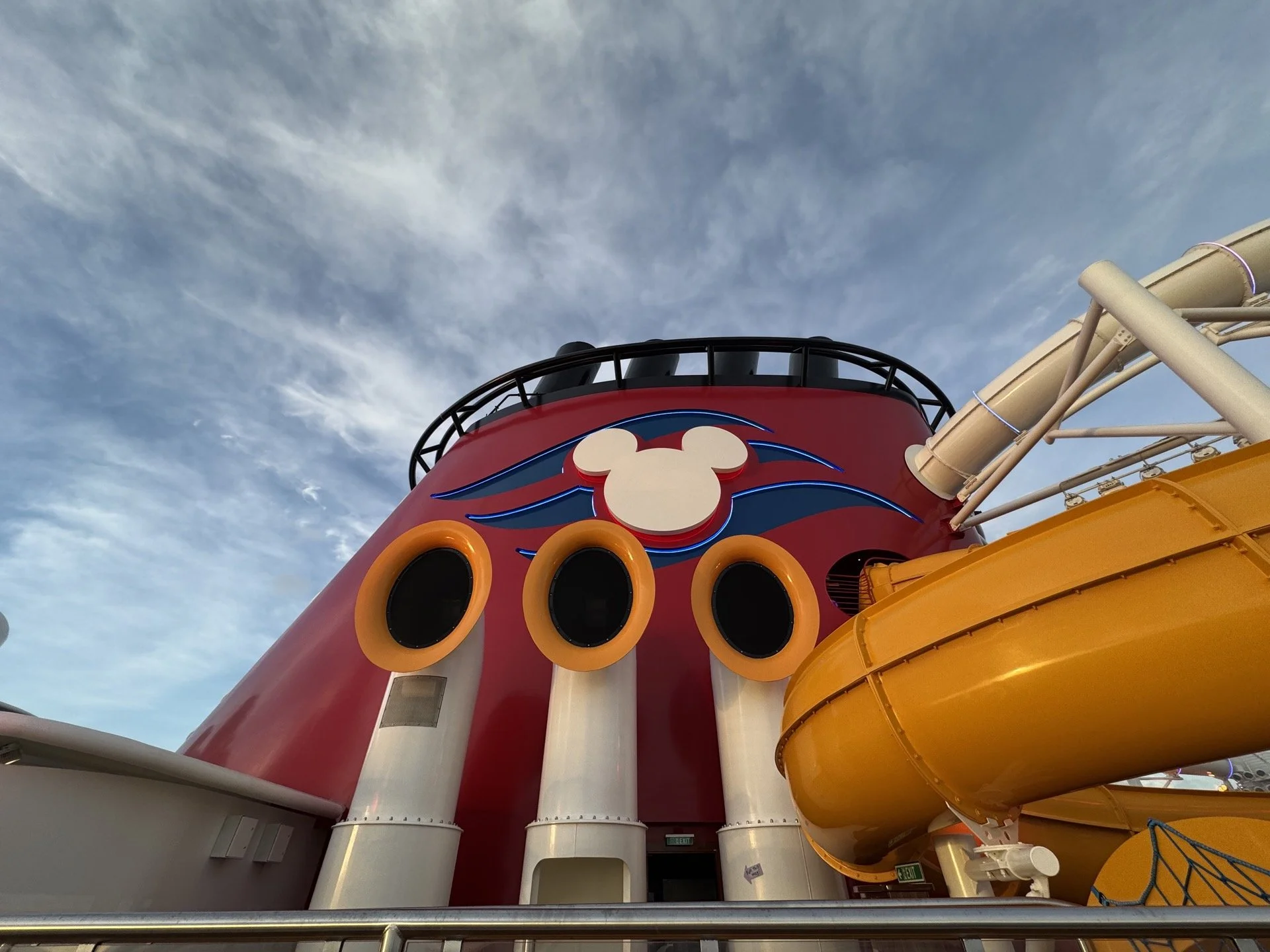
The Disney Treasure is an absolute beauty of a cruise ship.
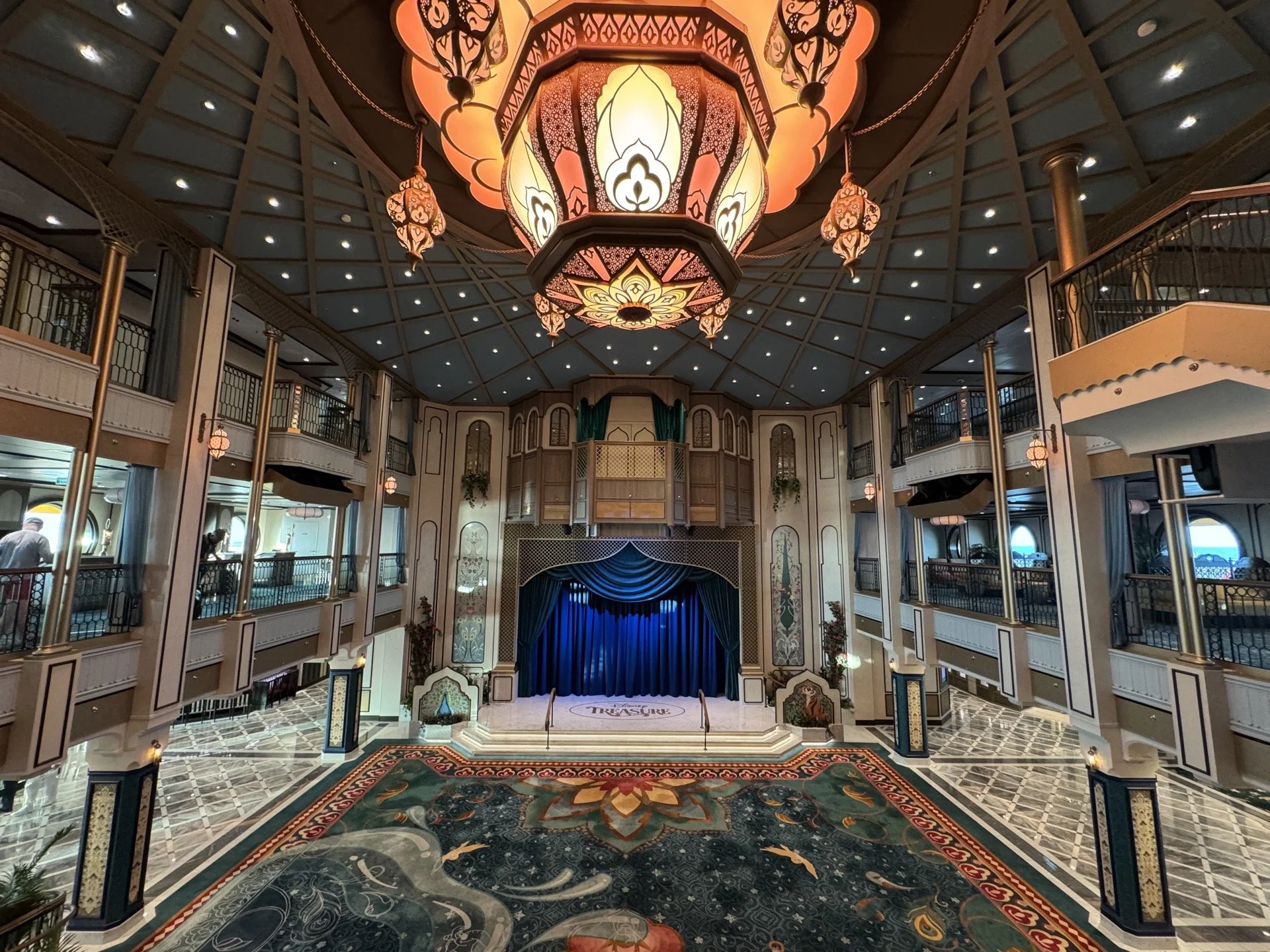
One thing Disney almost always does well is get the physical spaces right. This is key, because experiences begin with the senses, and people cannot overlook bad design in the physical world around them (no matter how many apps you try to plug them into). Good experiences are tainted by rust stains, tacky furniture, or broken fixtures—things that Disney does well to avoid.
By contrast, elite aesthetic, like that of the Treasure, serves to soften the worst experiences. For all the minor shortcomings I’ll report in this review, it was an absolute delight to just wander the ship around 7AM every morning, relaxing after my run.
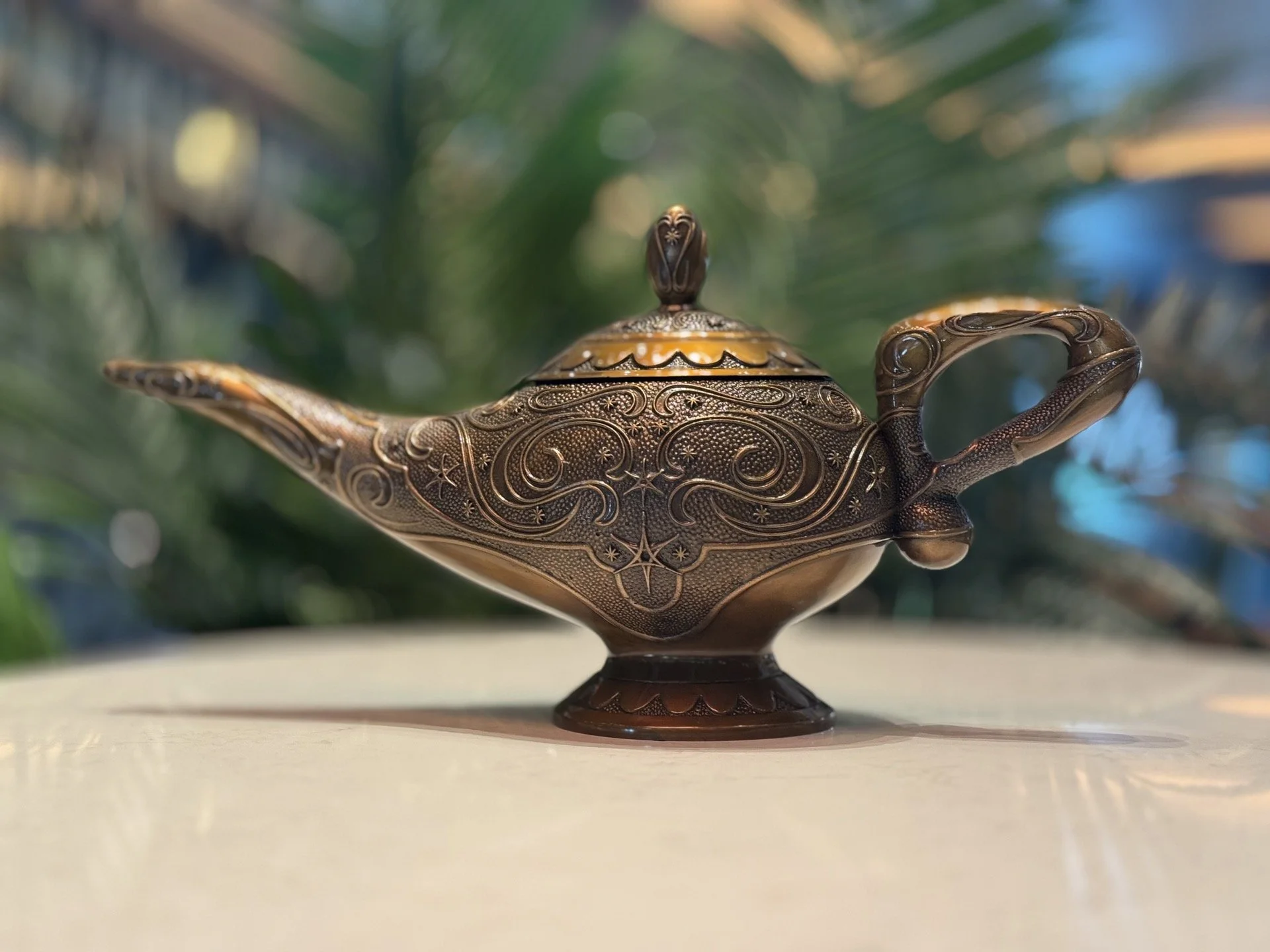
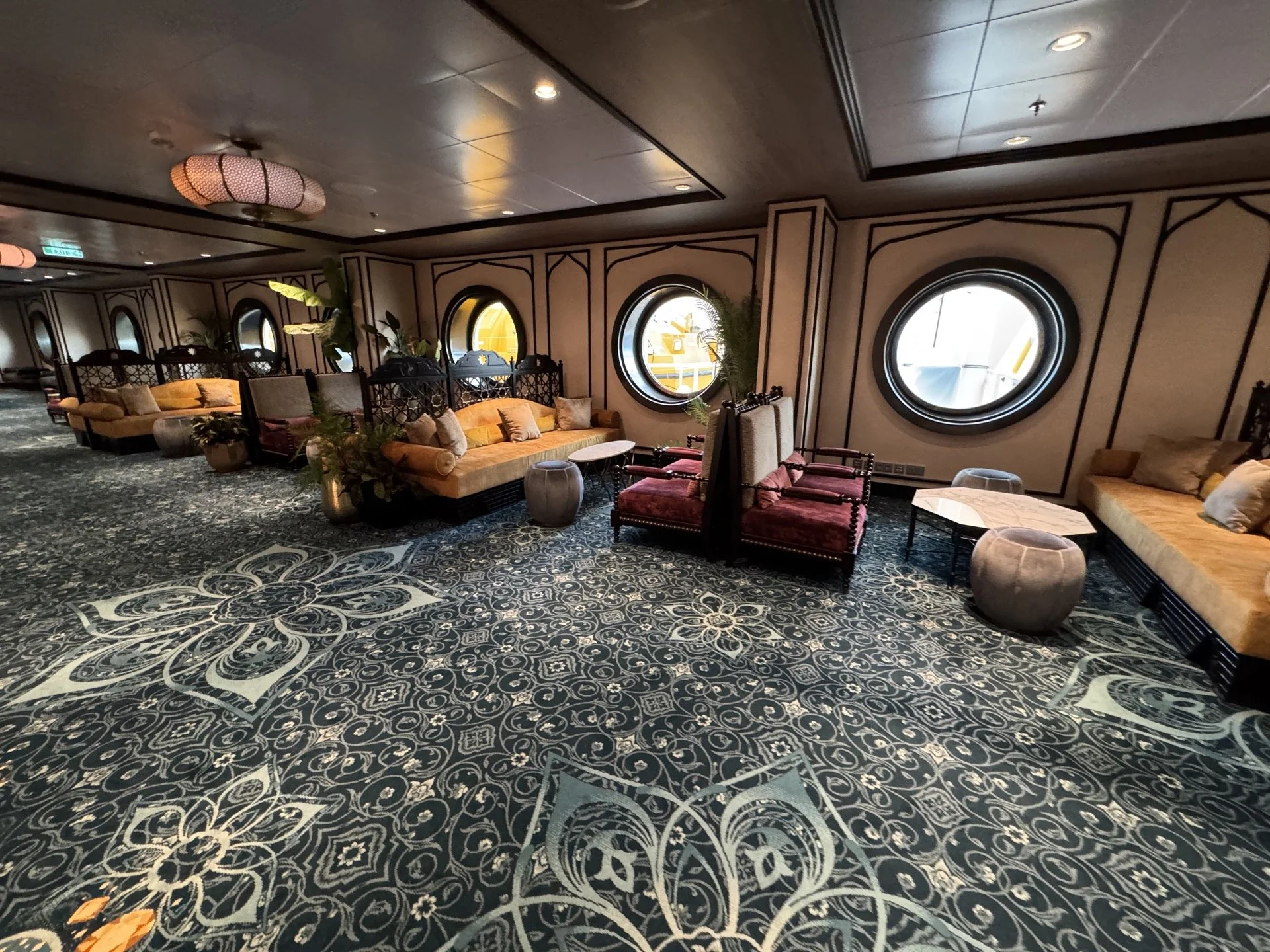
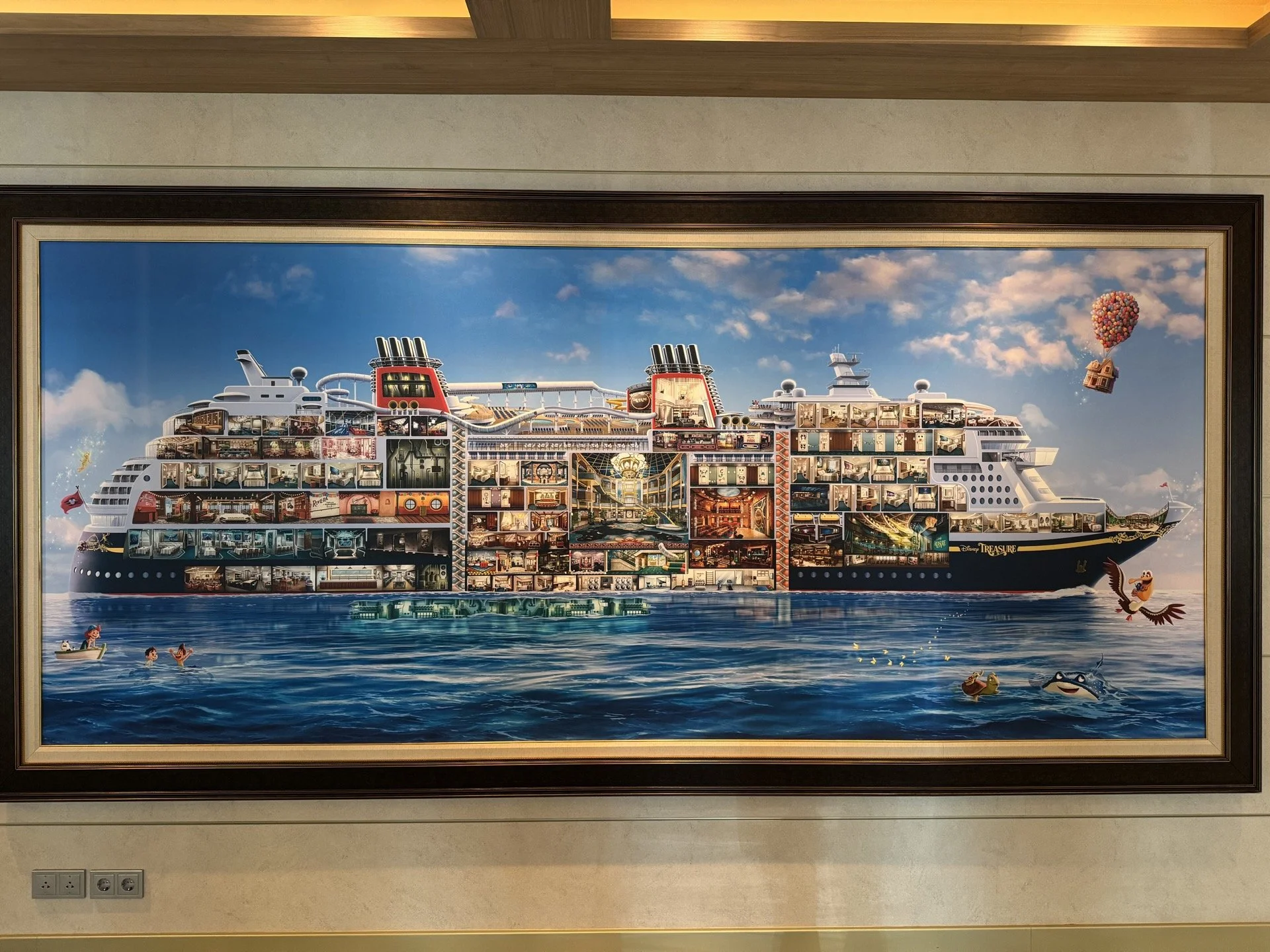
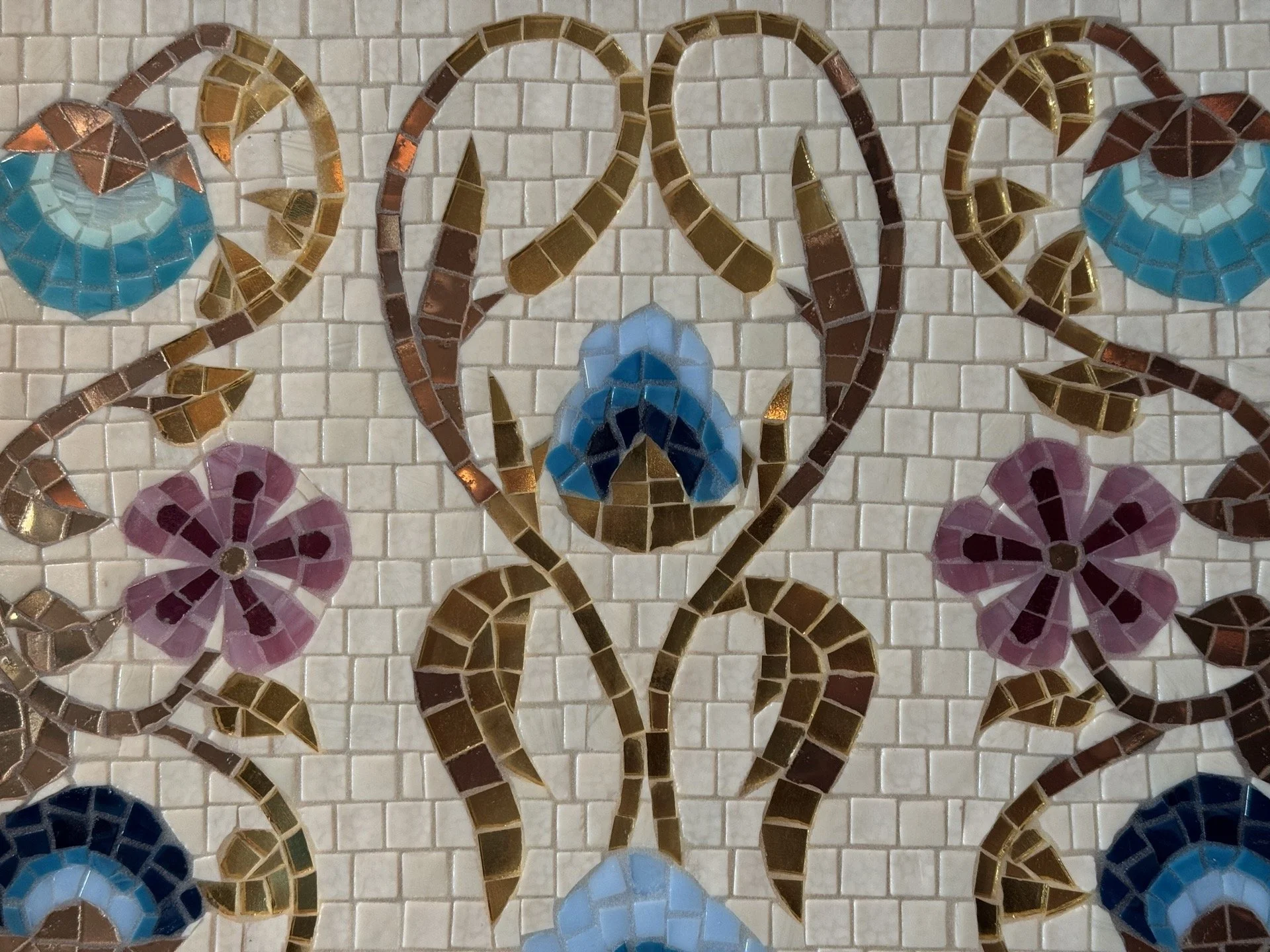
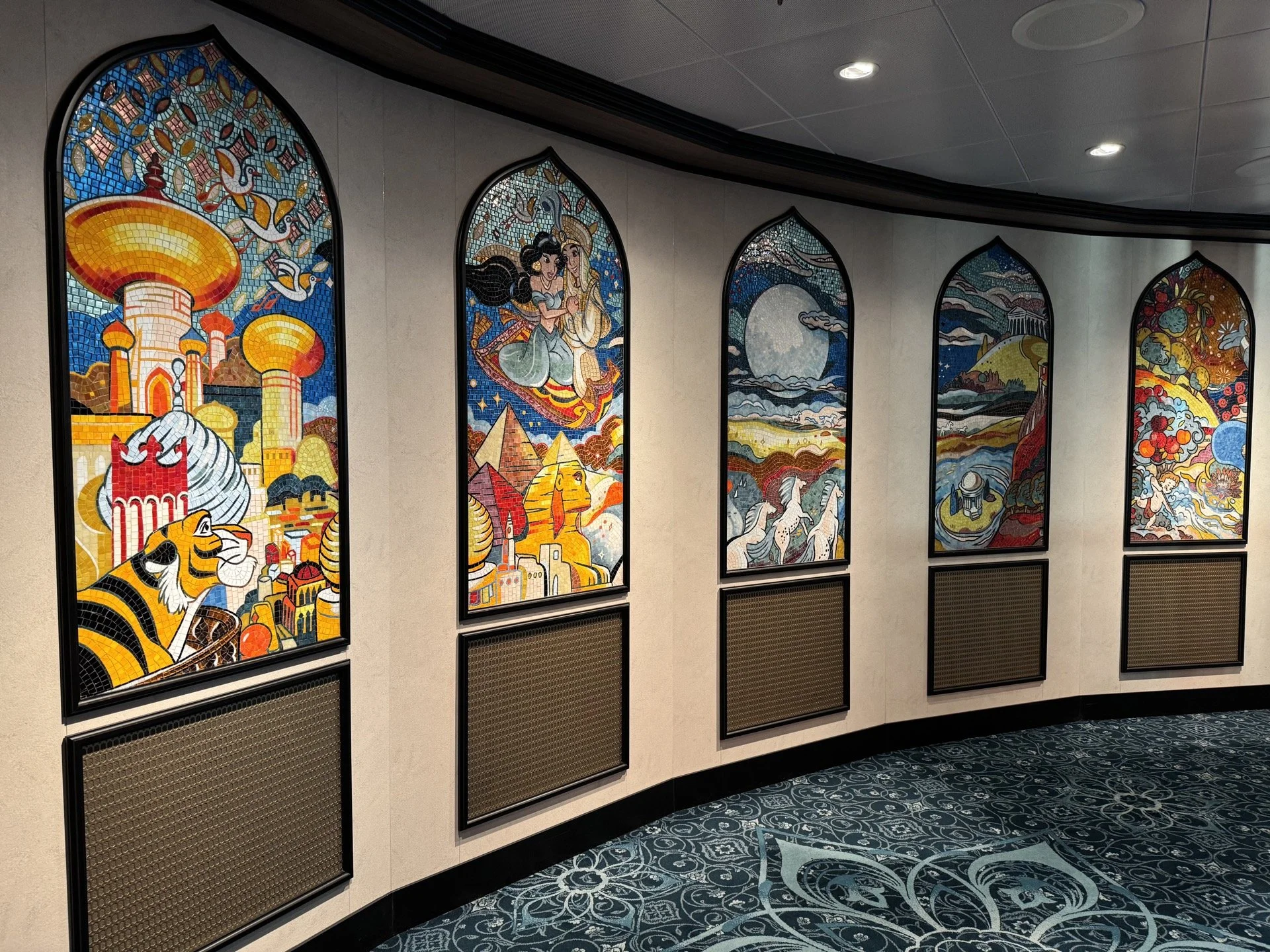
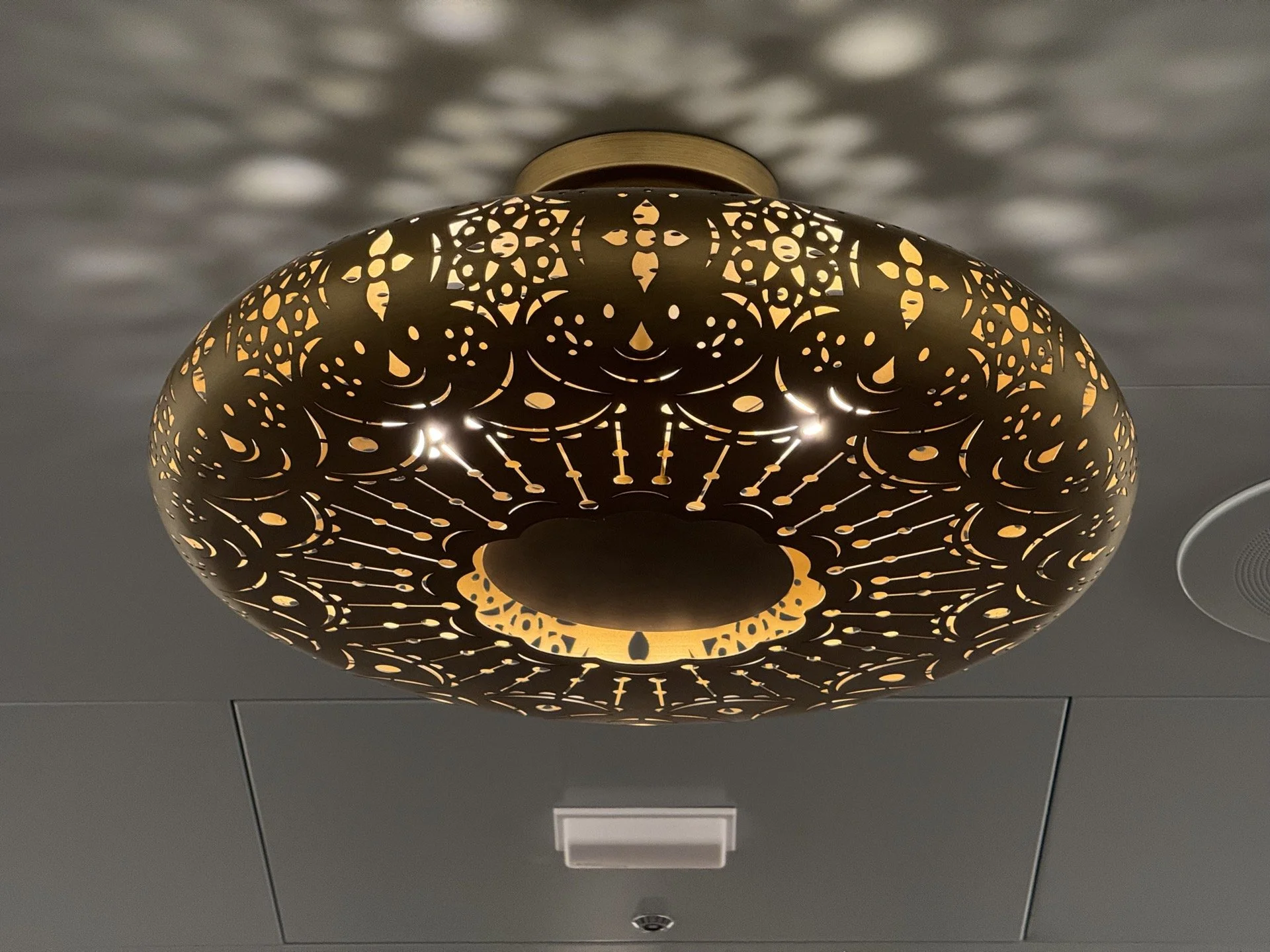
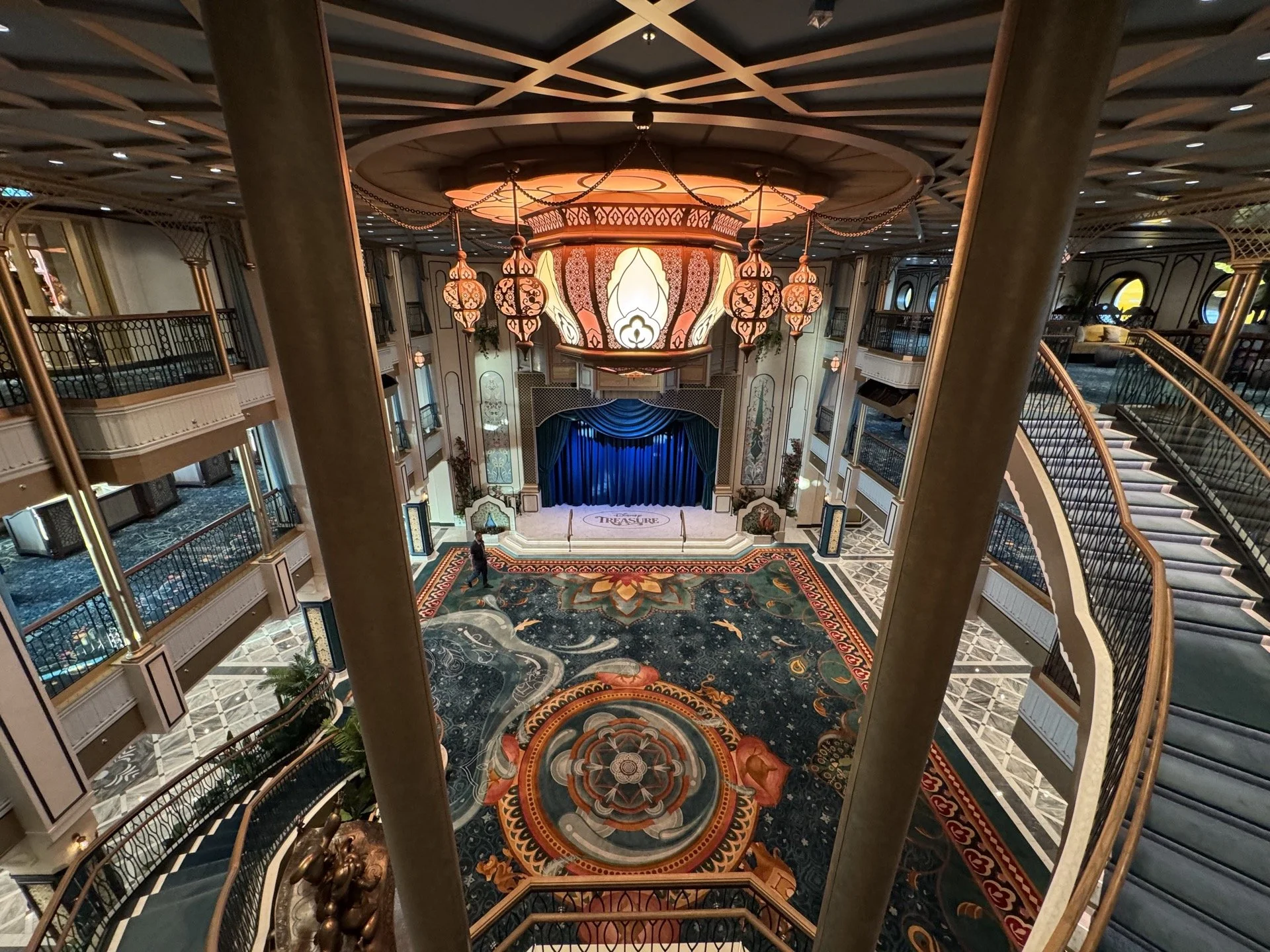
I could take in the sea and sunrise on the upper decks, or stand in awe of the cavernous Grand Hall, or put my face right up to some hidden Jungle Cruise detail in Skipper Society.
I’ll discuss below the more practical area where I think the Treasure is an upgrade on the Wish. But from a strictly aesthetic standpoint, when I look back on these two ships a clear distinction comes to mind. The Wish was safe; the Treasure is ambitious.
Put another way, despite being the first in its class, the Wish is perhaps the last in a long line of ships where the theme was (despite any marketing to the contrary) “Disney”. If Disney had only one modern cruise ship that fit the Disney brand—it would be the Wish.
The theme of the Treasure is, unabashedly, adventure. Where the Wish has its statute of Cinderella (the Disney princess), the Treasure has Aladdin and Jasmine on the Magic Carpet.
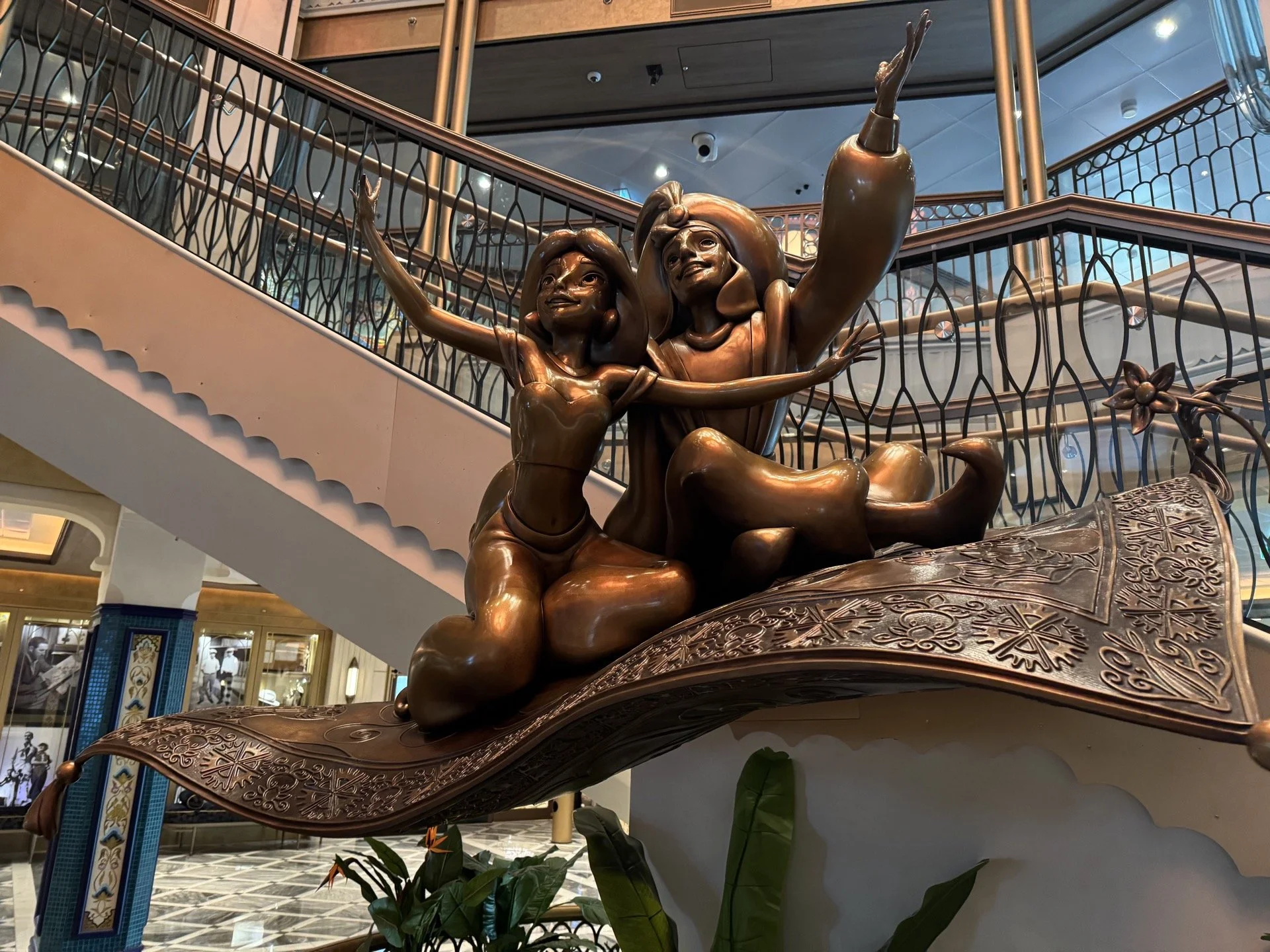
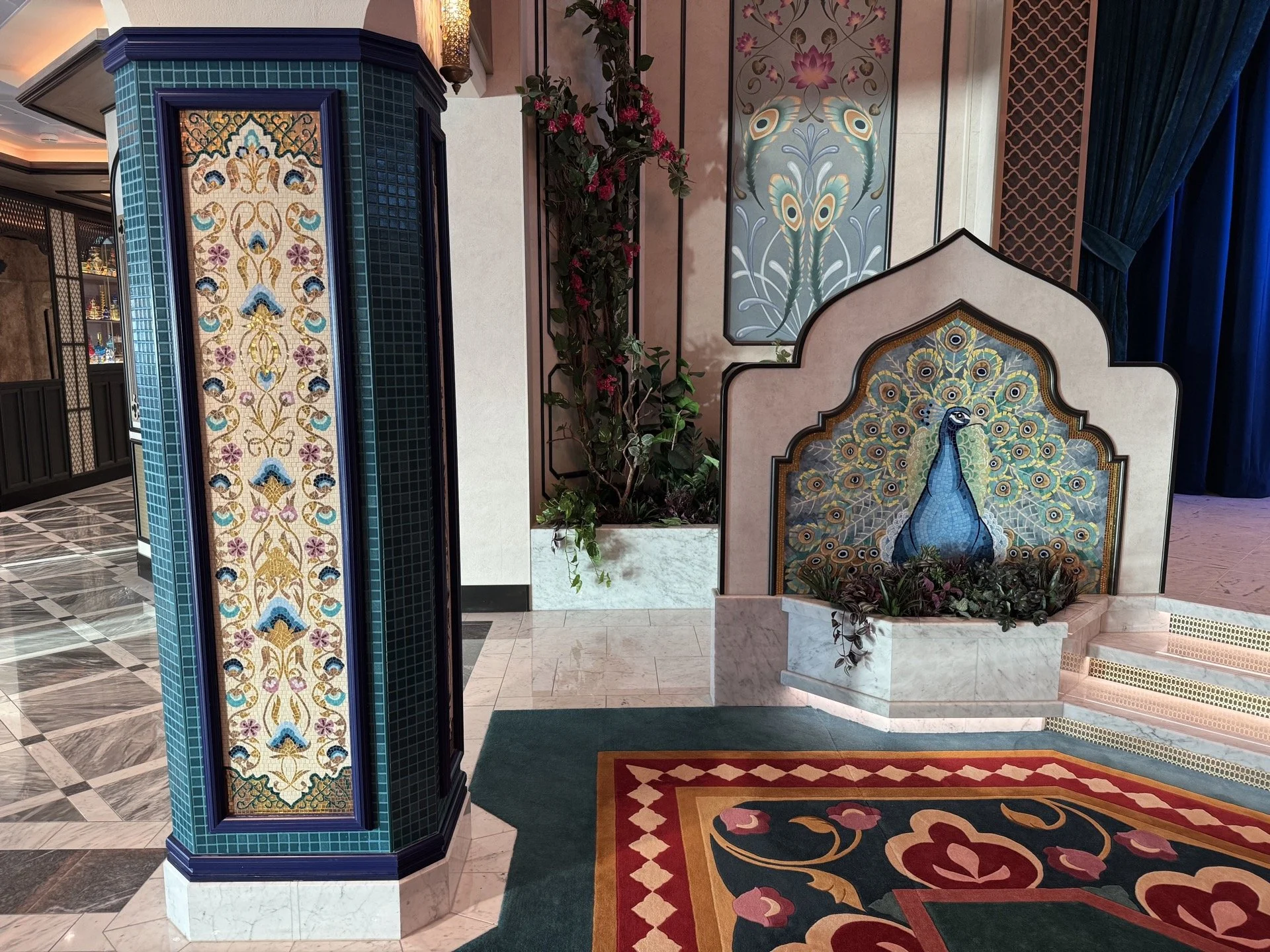
Where the Wish’s Grand Hall is surrounded by clean, flat surfaces, the Treasure’s offers a panoply of Islamic and Asian patterning.
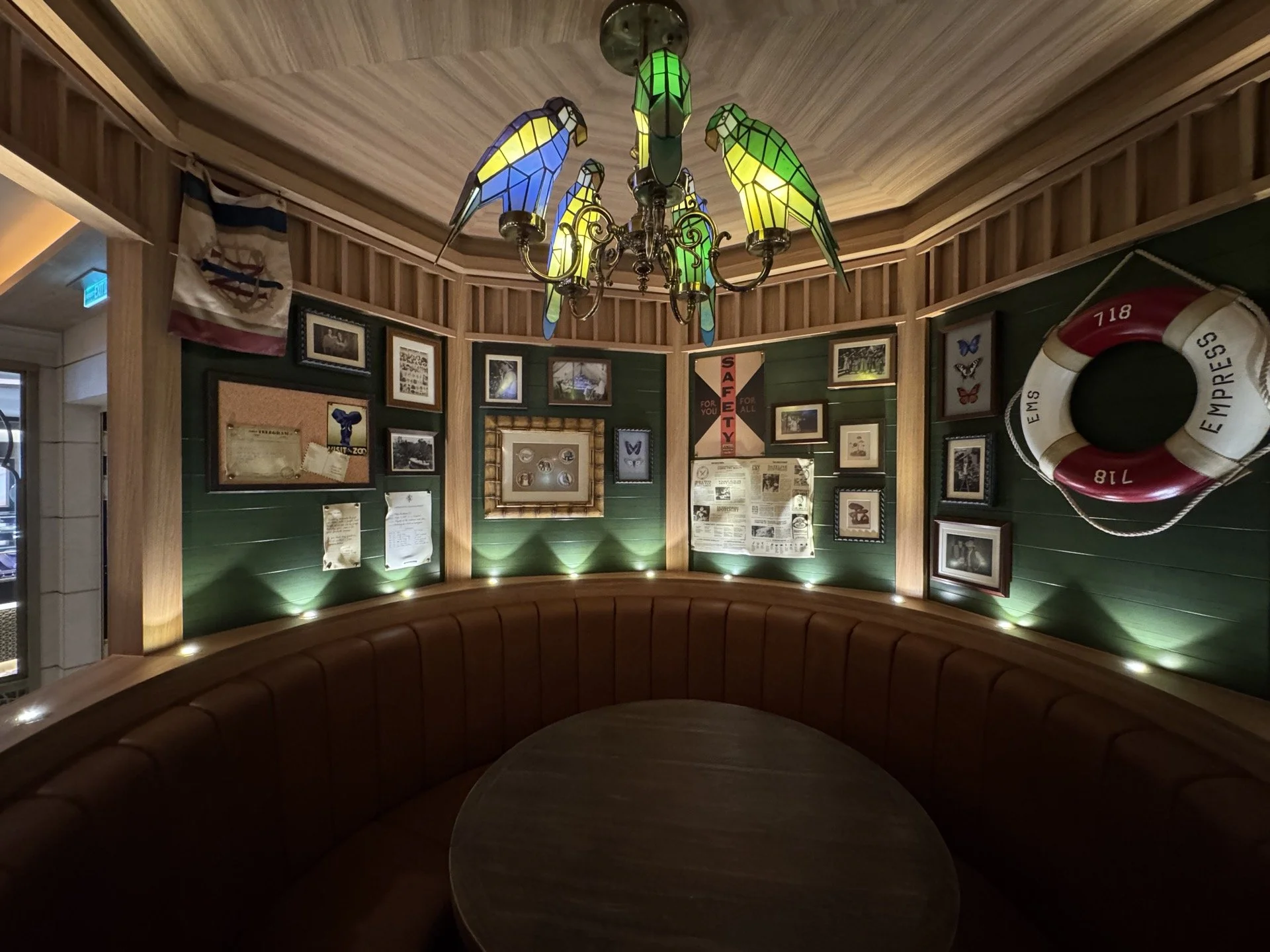
The Wish’s central bar is The Bayou, a comforting floral space. The Treasure trades that for Skipper Society—jungle vines and booth walls packed with detail.
Disney continues to invest heavily in making gorgeous, iconic ships. The Treasure is no different. By finding a way to elevate the already impressive Wish aesthetic, Disney shows the ambition that will be necessary as it continues to expand its cruise ship fleet.
But I said above that Disney almost always gets design right. Let’s talk more about the Wish class.
Ups and Downs of the Wish Class
The Wish class of Disney Cruise Line ships comprises the eponymous Disney Wish, along with the Disney Treasure and Disney Destiny. The Disney Believe, also in the Wish class, will be Disney’s next ship in 2027, and a final Wish-class ship will be operated by Oriental Land Company beginning in 2029. After that, Disney will switch to three smaller ships, moving on from the Wish class.
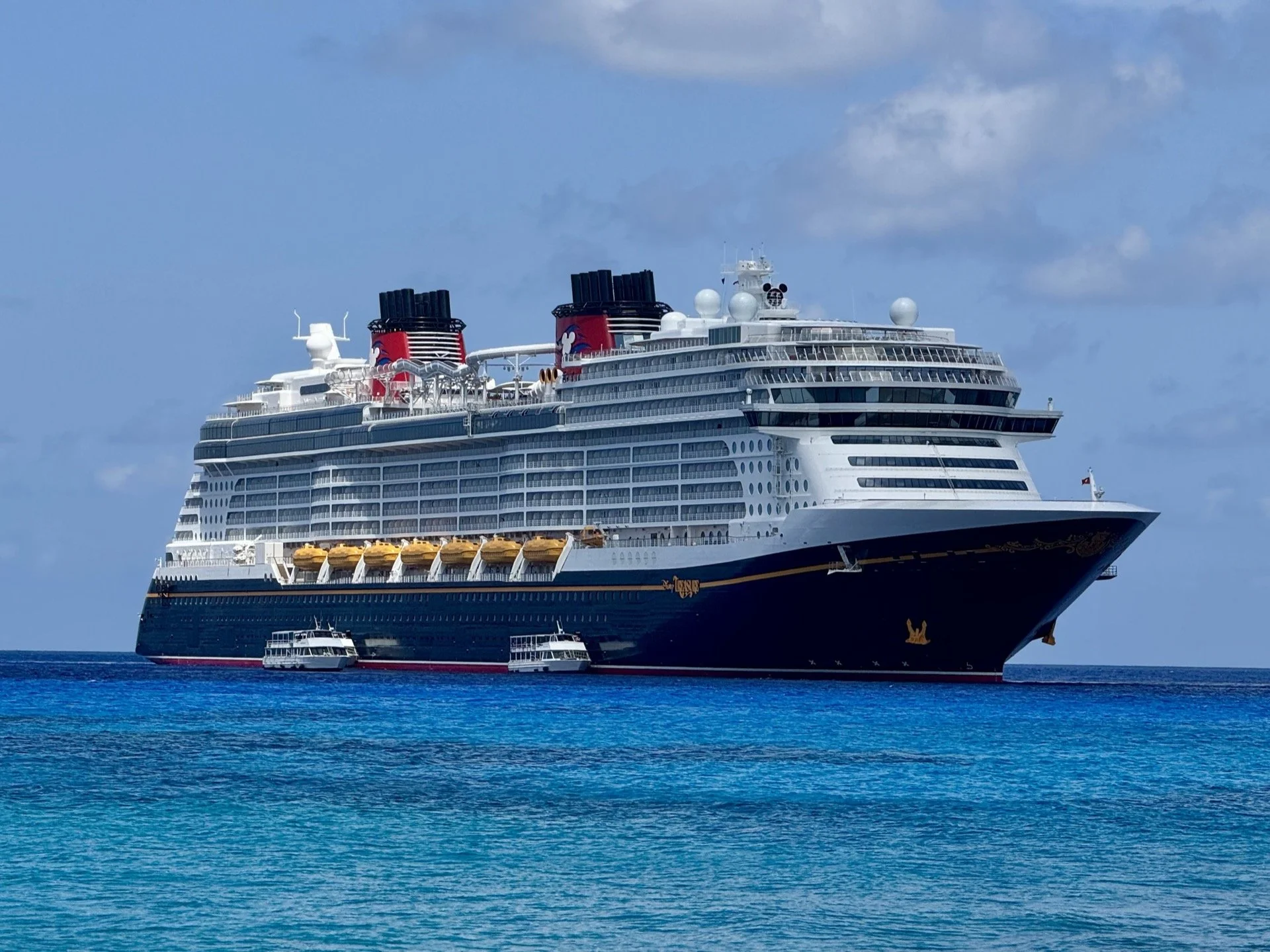
The Disney Treasure
Pretty much as soon as the Disney Wish debuted, people started noticing flaws. You can read my review of our 3 nights on the Disney Wish for my initial thoughts, but the broad issue was that the layout of the ship was incredibly quirky. Some quick examples that persist on the Treasure:
The full-loop shipside promenade of the older ships has been cut and replaced by a multi-level, U-shaped option
The promenade on the Wish class has sections that look into the outdoor portion of the spa
The nightlife district of the older ships has been cut, with the bars now slightly less intuitively organized
The adult-only section of the ship is a single J-shape around an upper deck, with only one end accessible to the rest of the ship
Family-friendly water features are disconnected from the main pool area and can’t see Funnel Vision
The second fanciest bar is attached to the lobby, right next to the drop off for the Oceaneer Club
The fanciest bar (The Rose) is next to family and teen/tween areas (albeit separated by a door and hallway, and The Rose is adult-only)
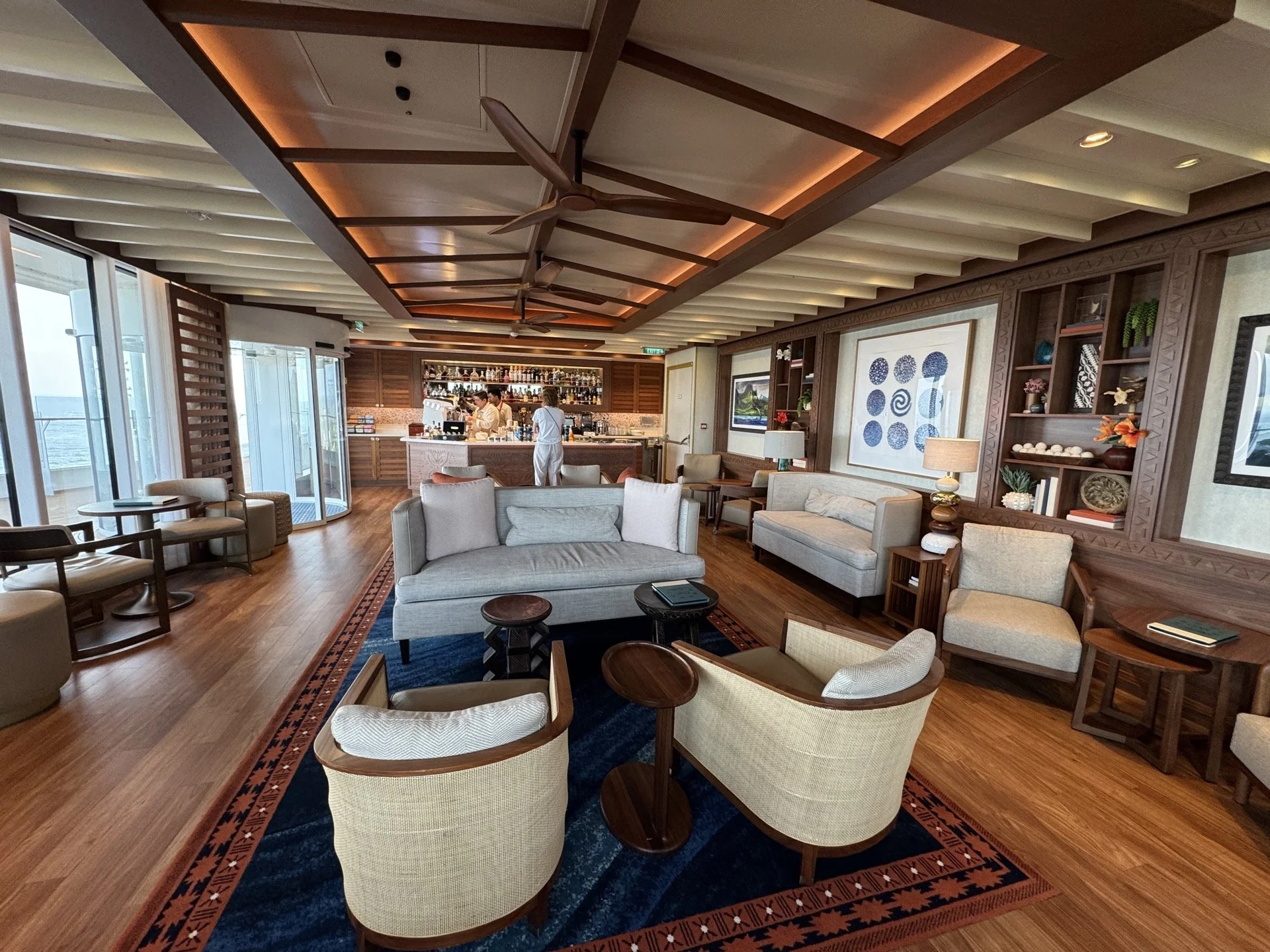
Cove Cafe on the Disney Treasure
I can’t say these are all obviously bad design choices. Certainly some guests love that Cove Cafe (the adult-only cafe) is as far from the “public” areas of the ship as possible. From a “family” cruise ship perspective, it’s maybe nice to have the themed bars—which welcome kids during the daytime—more accessibly placed.
And, fine, in “we’re all looking for the guy who did this” territory—you know that if the little kids’ splash pad had a view of Funnel Vision (the gigantic movie screen), I’d complain about that, too.
The Wish class isn’t all good aesthetic and poor function, though. It scored major points with me for improving some core points of our guest experience.
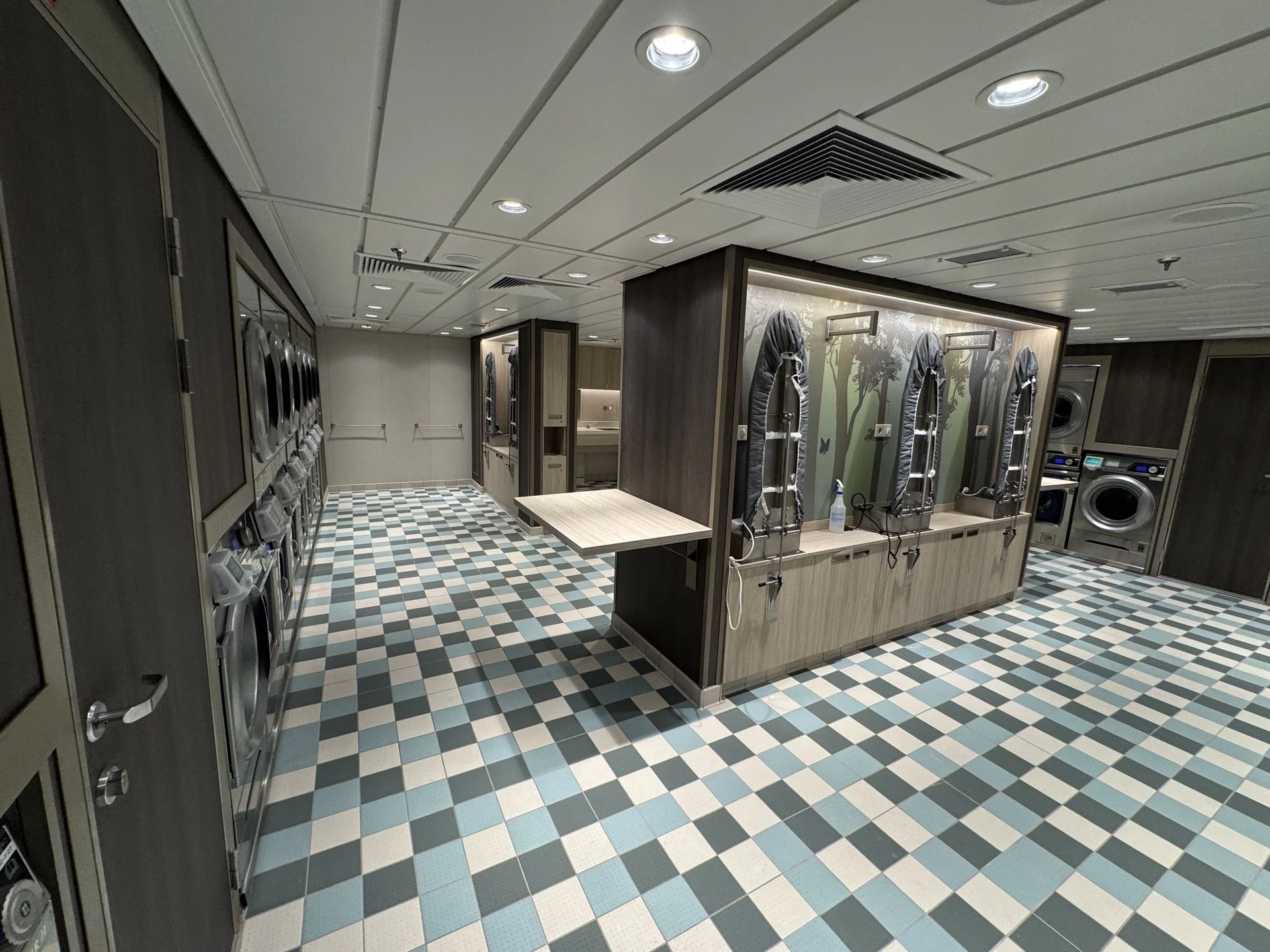
Gone are the small laundry rooms scattered throughout the decks; they’ve been replaced by a gigantic, centralized laundry room (this is particularly noticeable on the Treasure’s longer itineraries, but we used the laundry room on the Wish, too).
The Grand Hall offers not one, but two straightforward cafe-bars on its upper levels, relieving pressure on the themed bars and the specialty, adult-only coffee shop, Cove Cafe.
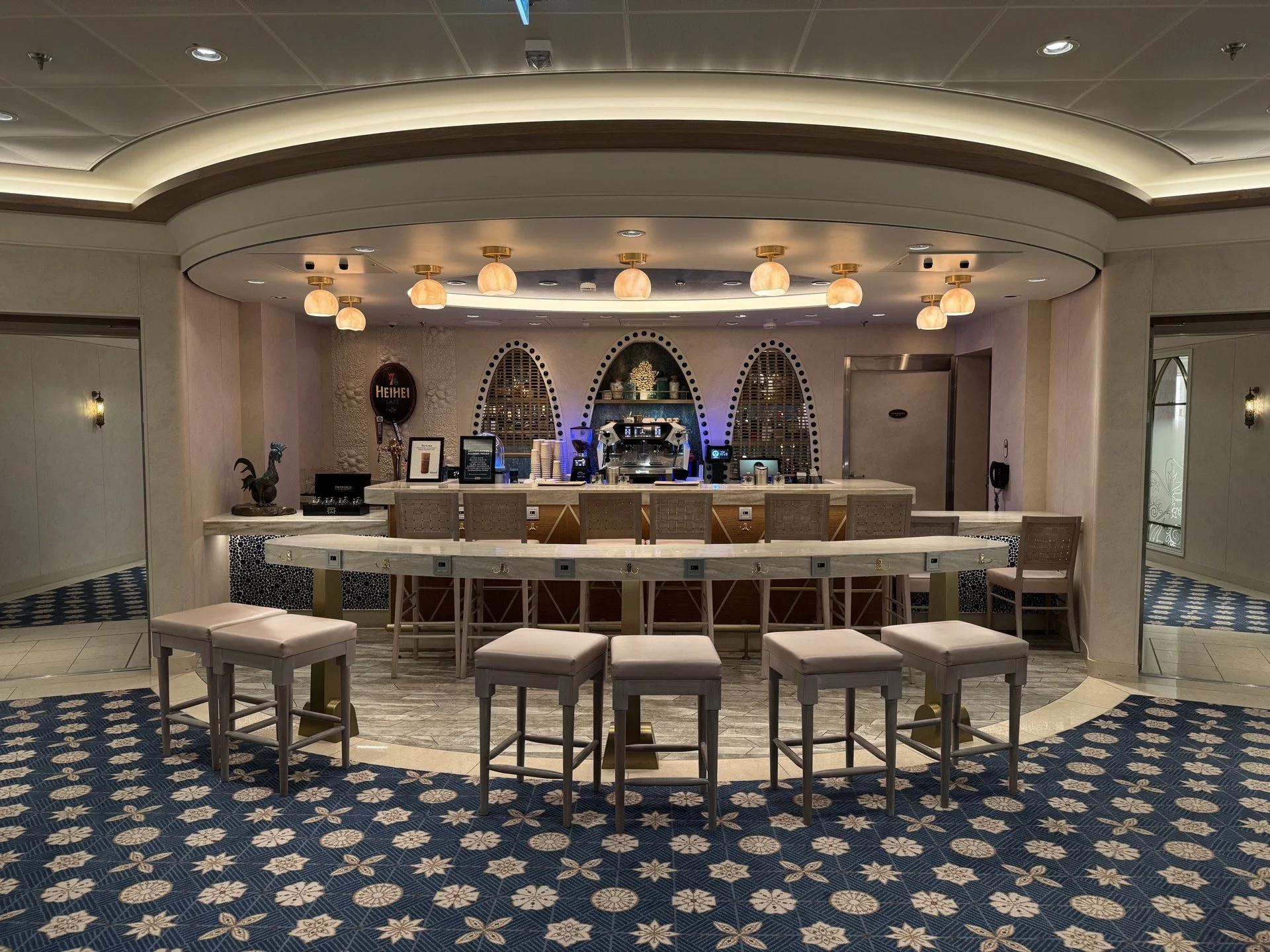
The six pools with views of Funnel Vision on the upper decks are presumably better for operations, and the AquaMouse “water coaster” is a modern touch.
And since you can easily make time for a movie on a longer itinerary, the two movie theaters on the Wish class were clutch on our Treasure trip. We watched Fantastic Four First Steps—a choice specifically suited for the cruise because we could up and leave at a moment’s notice if Zoe was uncomfortable.
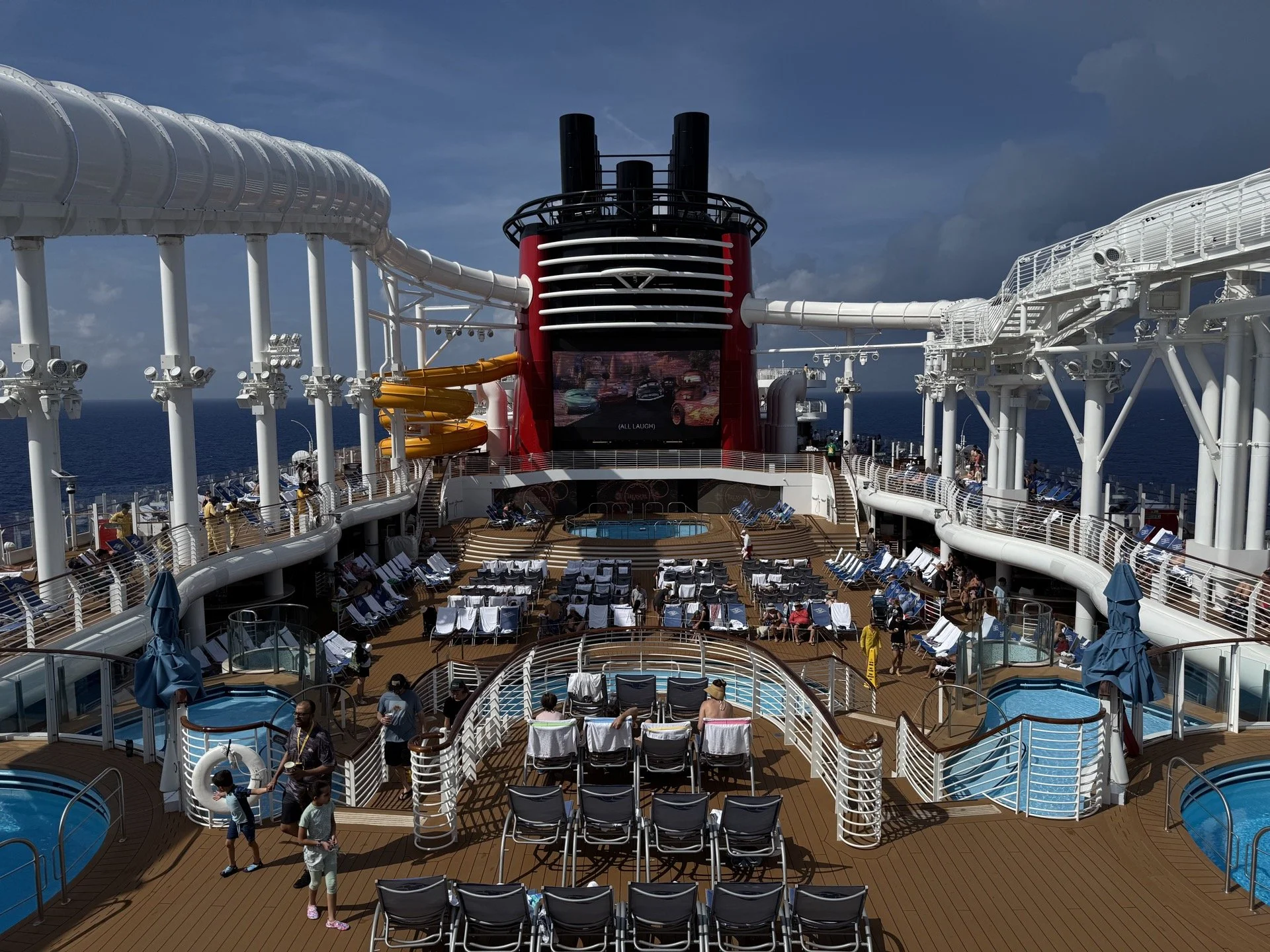
Moreover, Disney wasn’t content to just let the flaws of the Wish persist where they could make fixes. In one fan-favorite area, the Treasure got a bit of a glow up—bars!
Disney Treasure Bars — A Wish Class Glow-Up
As a repeat cruiser, I was happy to see Disney making some improvements on the Wish design, though the most notable upgrades were confined to one area of the ship—the bars.
My favorite example is noticeable as soon as you enter the Grand Hall—the updates to the lobby bar situation. On the Wish, Nightingale’s is the posh cocktail bar just off the Grand Hall. Sorry for not getting a good pic of this particular feature, but you can see at the 7-second mark of this video, on the left, that it’s got patio doors connecting its seating area to the Grand Hall.
Besides offering a direct line-of-sight to the kids’ club drop-off slide, these doors created a super awkward situation where guests would open them and then wiggle between tables to get to the bar (there is another, regular, door a few steps down the hall). Even without the awkwardness of navigating the tables, it breaks the ambiance of the posh bar to have lobby-dwellers popping in just to grab a quick drink.
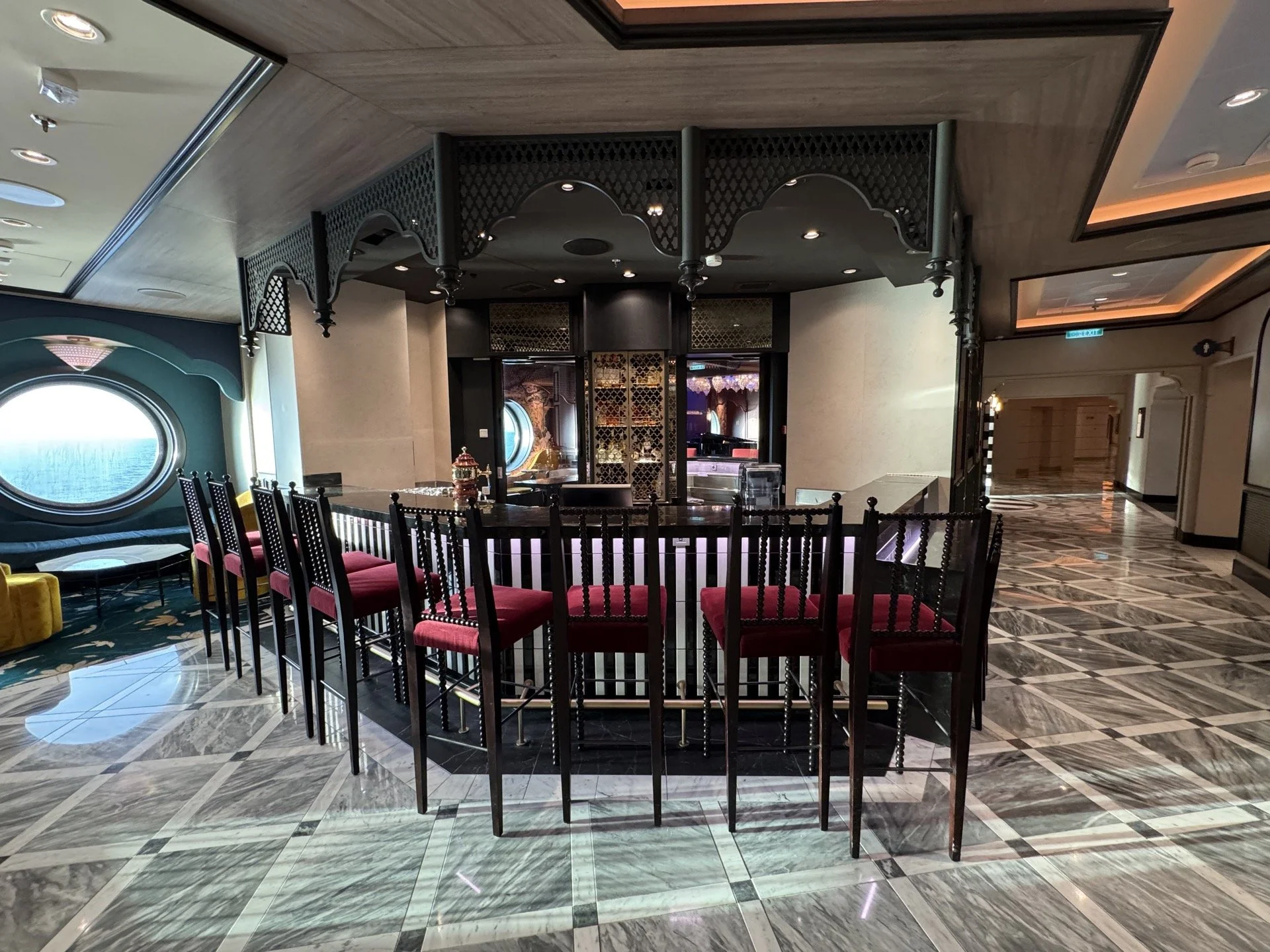
On the Treasure, the sister bar to Nightingale’s—Scat Cat Lounge—has been reorganized to have a Grand Hall-facing walk-up bar. This greatly improves the experience. Guests in the Grand Hall can just walk up and get a drink there, and the bar obstructs the view between the Oceaneer Club slide and the interior of the bar.
This is the sort of design change that honestly warms my heart. Restructuring a bar is not as flashy as leaning into viral beverage trends or slapping the most popular IP on a space, but it speaks to a genuine concern about guest experience. This is the sort of change that tells us that Disney is actually treating guests not just as “Pixie Dust” fanatics, but as real users of a product.
The other notable improvement on the Wish is a more straightforward thematic glow-up. Specifically, the Treasure’s Haunted Mansion Parlor is a major upgrade from the Wish’s Hyperspace Lounge.
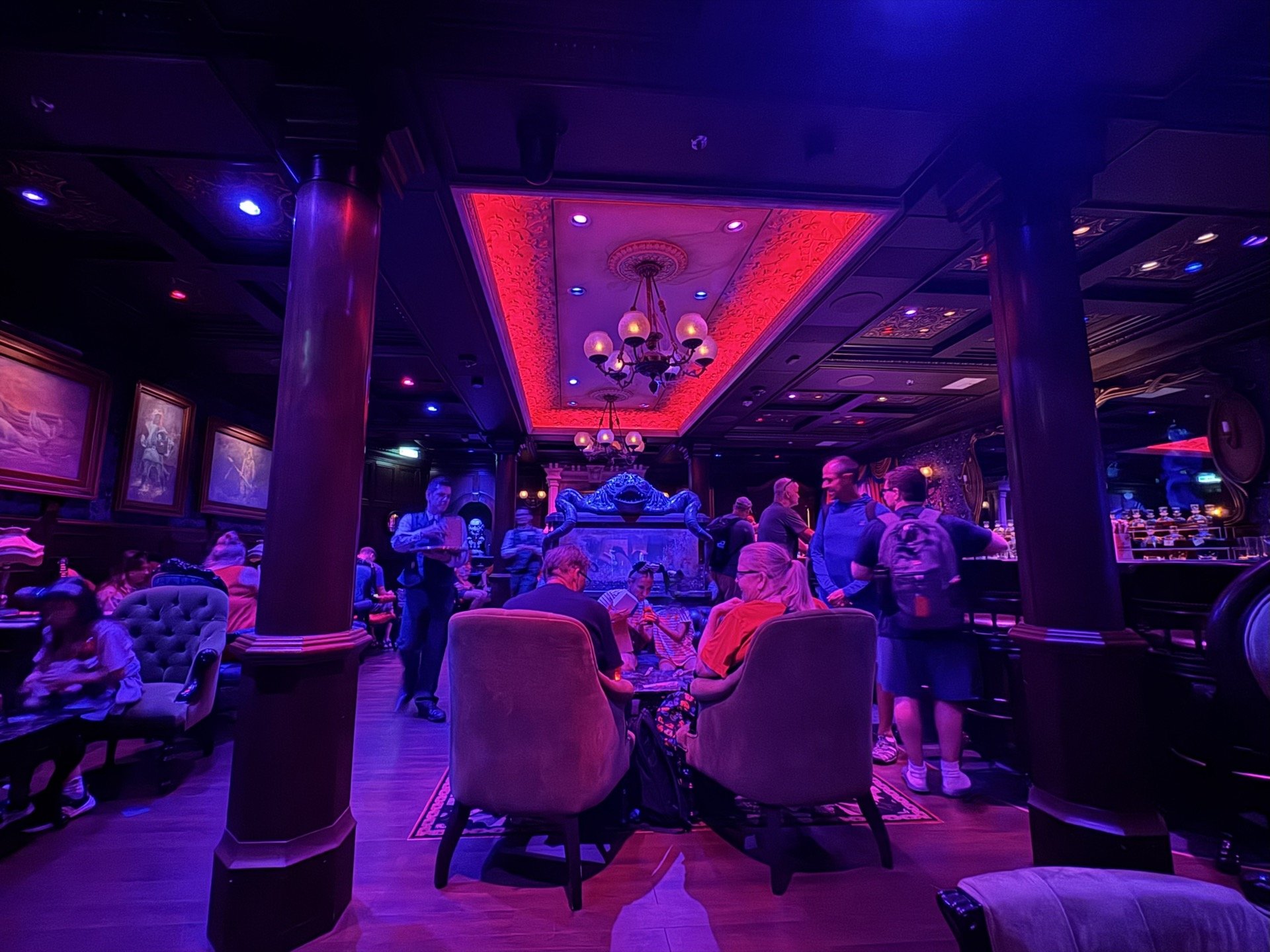
While the novelty of Hyperspace Lounge wore off pretty quickly, Emily and I both felt Haunted Mansion Parlor had real staying power, and our multiple visits with different seats (to see different effects) were all worth the time.
As I said in the trip report, Haunted Mansion Parlor joins Trader Sam’s and Oga’s Cantina in the elite tier of Disney bars. While it’s disjointed from the rest of the ship as far as theming goes, it’s exactly the sort of offbeat spot Disney needs to have. Disney’s strength is not only in theming, but in thematic diversity. However a given ship is themed, it needs to have a little bit of everything.
There is one change from the Wish that I think went wayward. Periscope Pub’s ambition (as compared to the Wish’s Keg & Compass) is the enemy of its success. The bar is meant to be themed to the Nautilus (a submarine), so much so that the ceiling is designed with screens to mimic the ocean depths.
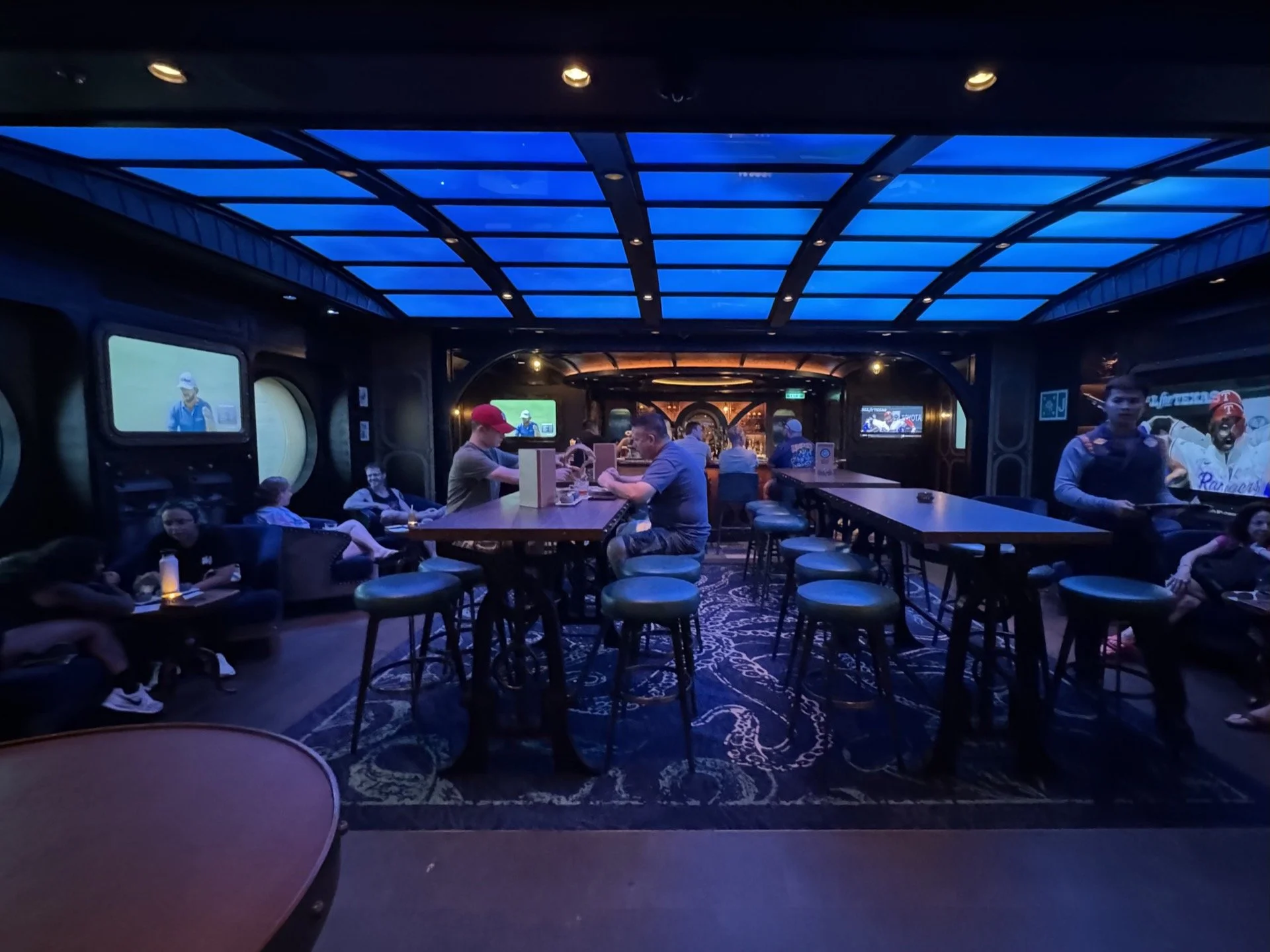
This is a great idea and some cool execution…that is completely destroyed by the gigantic porthole windows looking out onto the actual ocean surface. Yes—20,000 Leagues Under the Sea is ripe for cruise ship bar theming, and this bar aced the smaller details of that. But putting it in a space with porthole windows? I would have nixed that at the brainstorming phase. (On this point, I have to concede I seem to be in the minority. I agree with the prevailing opinion that the bar is excellently detailed throughout. And at night—peak pub time—the portholes are probably a non-issue. Still…)
Altogether, I praise Disney for finding ways for the Treasure to improve on the Wish—and ambitiously so—where it could. It’s not possible to just redesign the entire promenade or restructure the adult-only section. The improvements on the bars were smart, guest-forward updates.
But as much as I nodded my head in satisfaction upon setting eyes on Scat Cat Lounge, Haunted Mansion Parlor, and the wonderful aesthetic of the ship, it was a service experience that really surprised me on this cruise.
I…Like…Rotational Dining Now?
Like the Wish, the Treasure has a strong lineup of well-themed table service restaurants. Both ships have Worlds of Marvel, complete with an Ant-Man storyline one night, and 1923, a nicer Disney museum-themed restaurant. On the Treasure, Plaza de Coco offers live entertainment during the meal (the Wish has Arendelle).
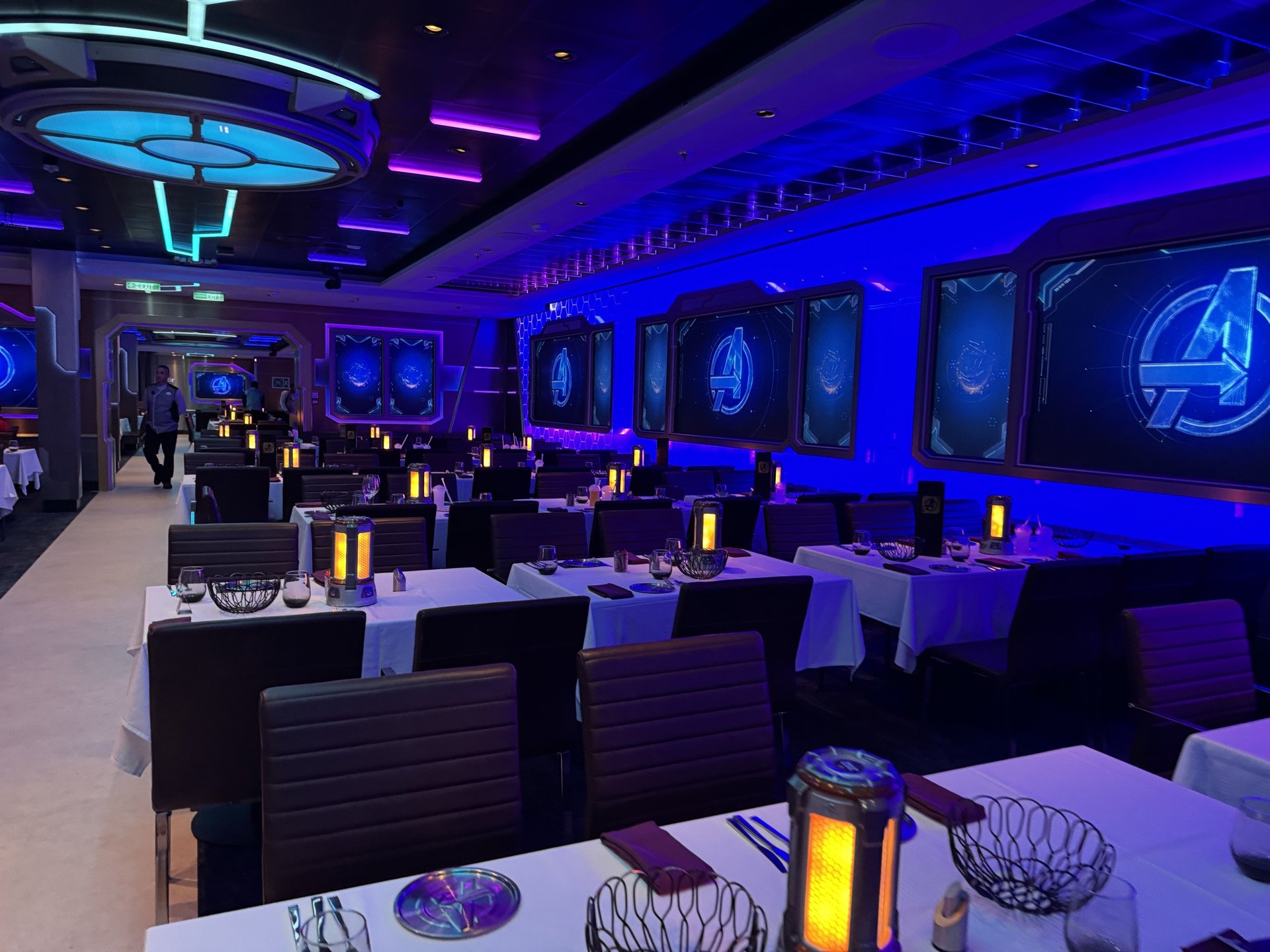
Worlds of Marvel on the Disney Treasure
From a food and entertainment perspective, these were all great. The themed restaurants on the newer ships feel a lot more uniquely Disney than those on some of the older ships, and I think leaning into table service restaurants as an “experience” is overall the right move.
I’m not personally a fan of the rotational dining system. To avoid a tangent here, let’s just say it doesn’t fit my vibes. Everything some people like about it—keeping the same friendly staff, eating at the same time with the same people, having a set plan for dinner every night—I just don’t like. I understand why Disney does it, but it’s not for me.
With that in mind: I was shocked to not hate rotational dining on the Disney Treasure. So, what worked so well on the Disney Treasure?
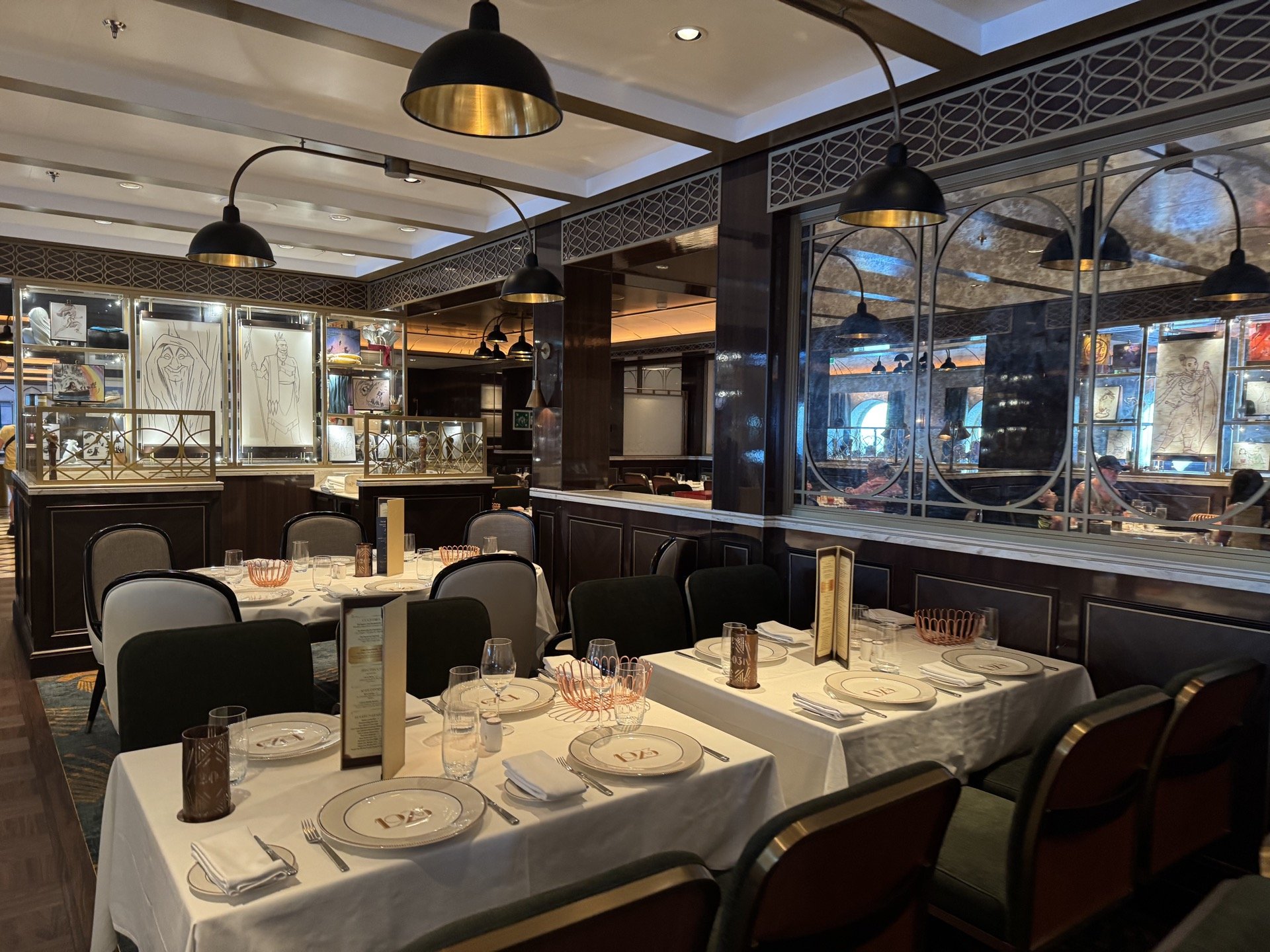
1923 on the Disney Treasure
The thing that made the biggest difference was the service. Our service team was by far the best (“best” for us, at least) we’ve had on a Disney Cruise. Our server gave us the exact amount of friendly attention we wanted (which is not much) and got us through our meals at a reasonable speed. More notably, she had a calmness about her that I’ve very rarely seen on Disney cruises. The frantic urgency I’ve often experienced when giving my order was totally absent.
In a nutshell—the highlight of our service experience came on my birthday. Our server looked at me and asked if we were celebrating anything special today. I said “No, thank you.” And she said “Okay, have a good night.” And I’ve never felt so seen.
I get why most guests feel like rotational dining gives them a special connection with their service team, but I’ve never felt that. I’ve always felt like I was just another one of the pile of 1000 meals they stacked in the back. This time was different.
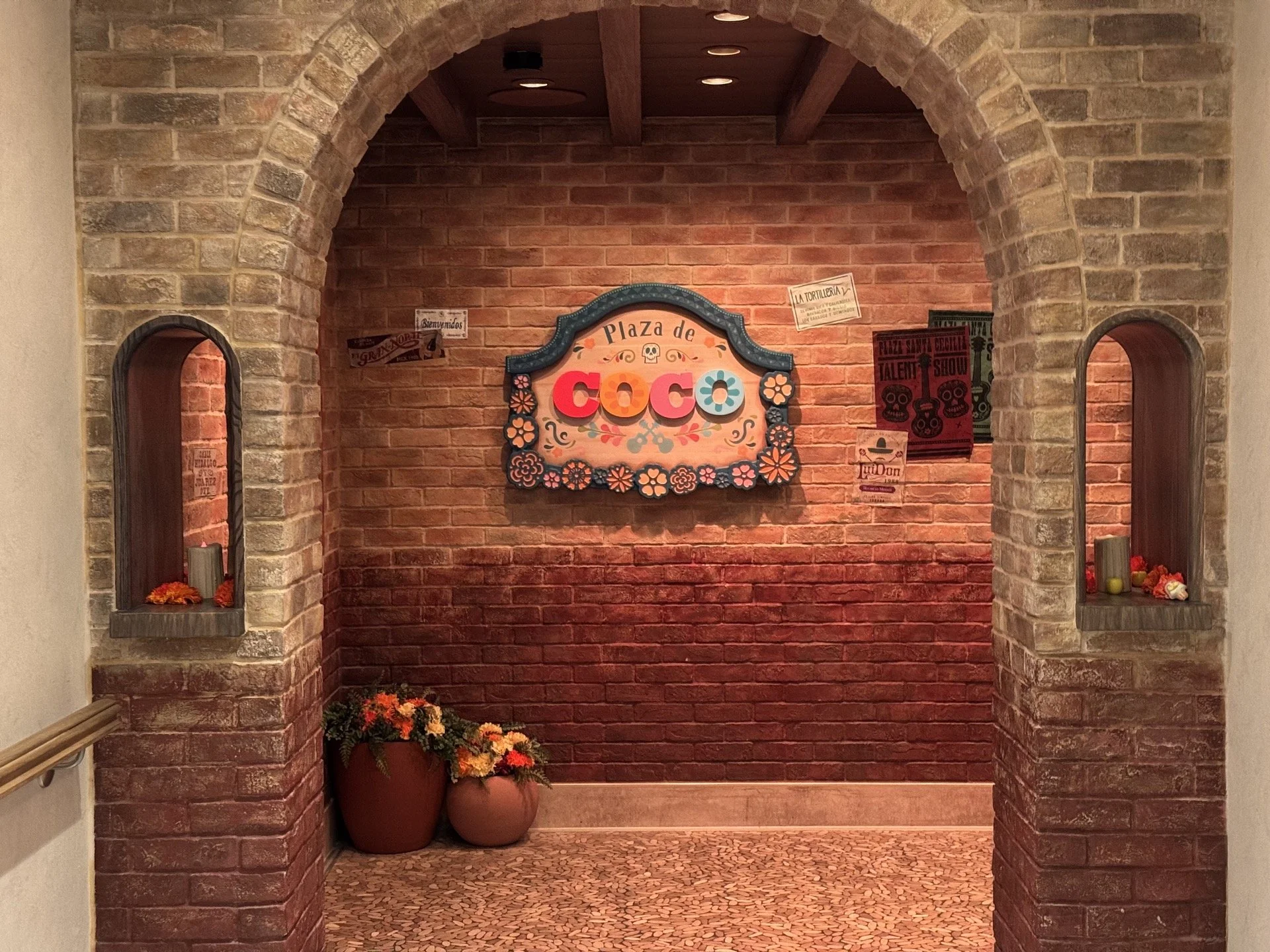
Plaza De Coco entrance on the Disney Treasure
For what it’s worth, we were also pleasantly surprised with the food. We’re vegetarians and not particularly foodie vegetarians at that, so I’ll spare you the food commentary.
I was happy the Head Server came over to ask how we’d enjoyed the vegetarian food on the ship. I told him my standard protocol is to ask for Indian food (an off-menu option across Disney Cruise Line) after night one, but I managed to stick to the menu for this entire itinerary. He claimed (and I believe) the Wish-class kitchens and operations are better equipped, resulting in better vegetarian options.
Heading into a daunting 7-night itinerary, my initial plan had been to skip three or four nights of rotational dining. We wound up skipping only one, Pirate Night. I wouldn’t quite say I’m a convert—but I’m starting to see how nice rotational dining is when the service team matches your energy.
Are We Not Entertained?
While rotational dining is the core Disney Cruise Line experience I found myself most pleasantly vibing with on this trip, feature entertainment was the core experience I found myself most surprisingly clashing with.
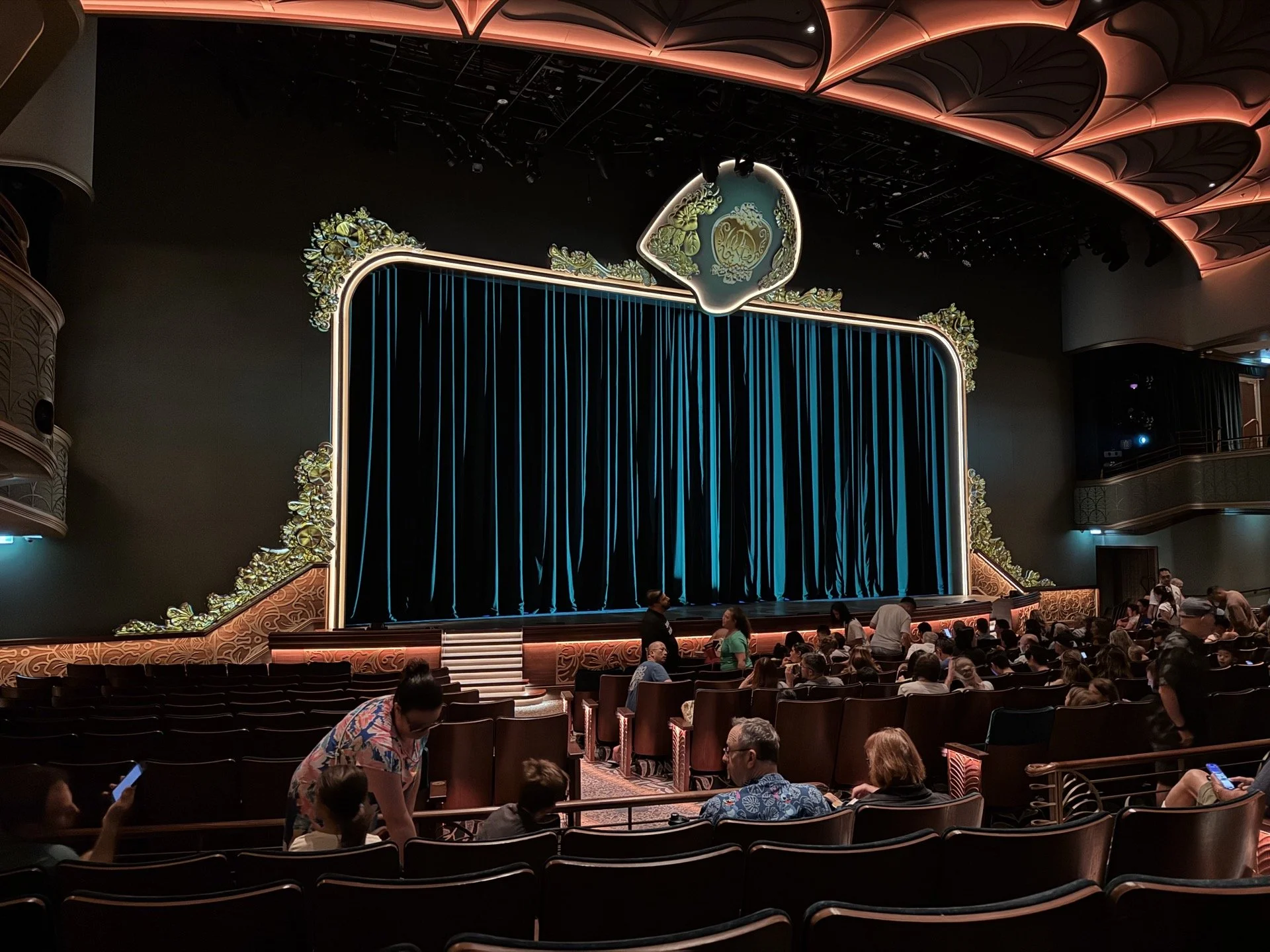
Inside the Walt Disney Theater on the Disney Treasure
Let’s start with the positives. Seas The Adventure, the first feature stage show, is a great way for kids to dip their toes into “Broadway style” shows. Being able to go to this and feel like we checked that box with Zoe is an easy win early in the itinerary.
The ship’s “storytellers”—a new concept on only a few Disney ships—are Coriander and Sage. This duo of adventure-themed characters hosts a variety of activities throughout the week and can also be found on mini adventures throughout the ship. (Whatever my feelings about the ships aesthetic ambition, I still couldn’t help but grin every time Coriander and Sage emphasized “adventure,” which was a lot, because Disney has another ship literally called the “Disney Adventure.” Surely some legwork to distinguish treasure from adventure is in order.)
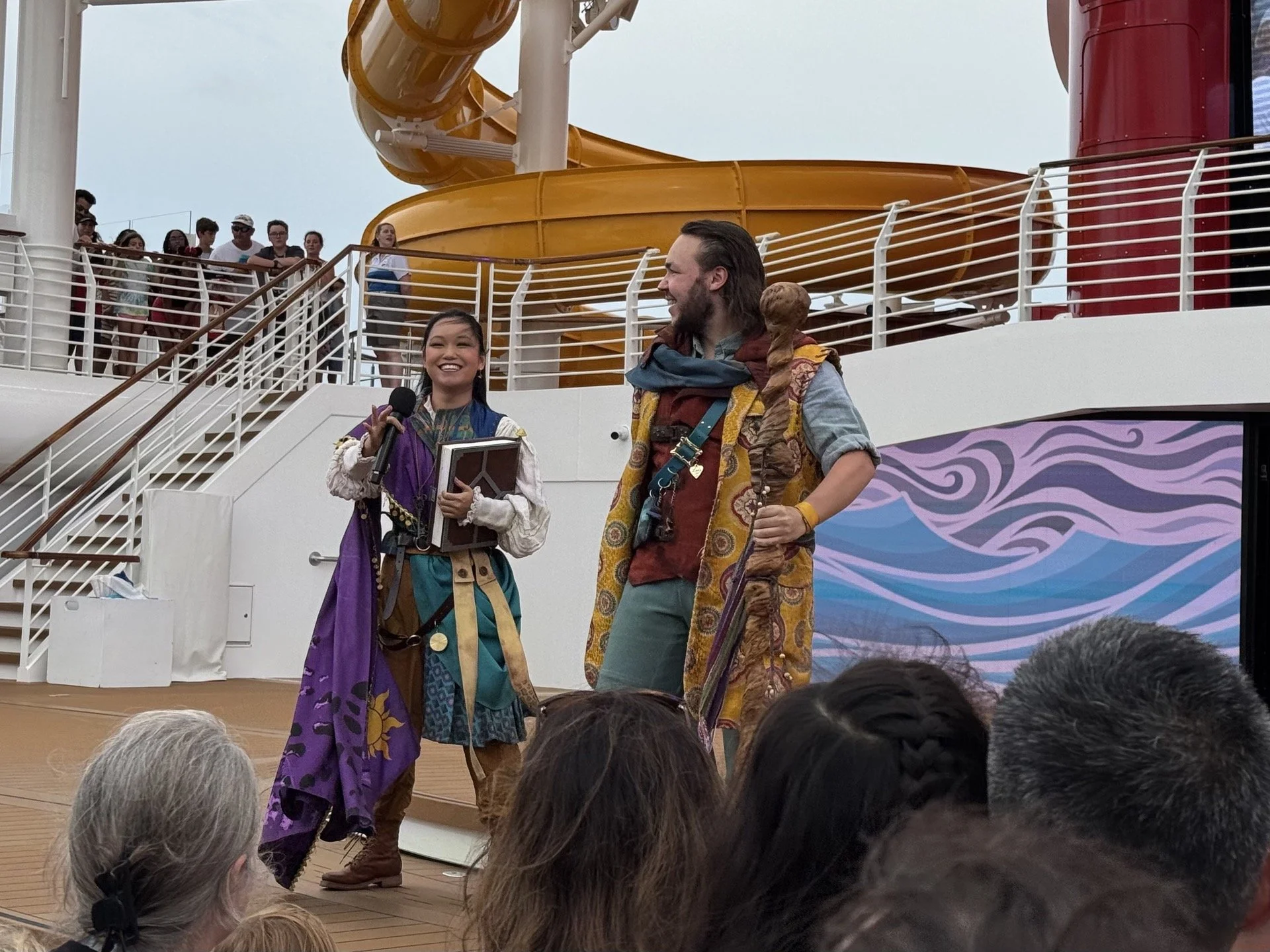
Coriander and Sage on the Disney Treasure
Ship “hosts” like this are not unique to Disney Cruise Line, but I think the thematic aspect of Coriander and Sage requires a little emotional buy-in (read about them more before your cruise and decide if you’ll care about them or not). Some people really enjoy them, but for us it was more like “oh wow these two pop up everywhere.” This isn’t generally a problem, though I did note their prominence didn’t really help our experience at Adventure Tea.
Some of the more minor entertainment really shined. Emily found the performance by Magician Zak Mirz “incredible”, and a late-night piano show, Sound Tracks: Music from the Parks, in Scat Cat Lounge was one of the best experiences I had aboard the ship.
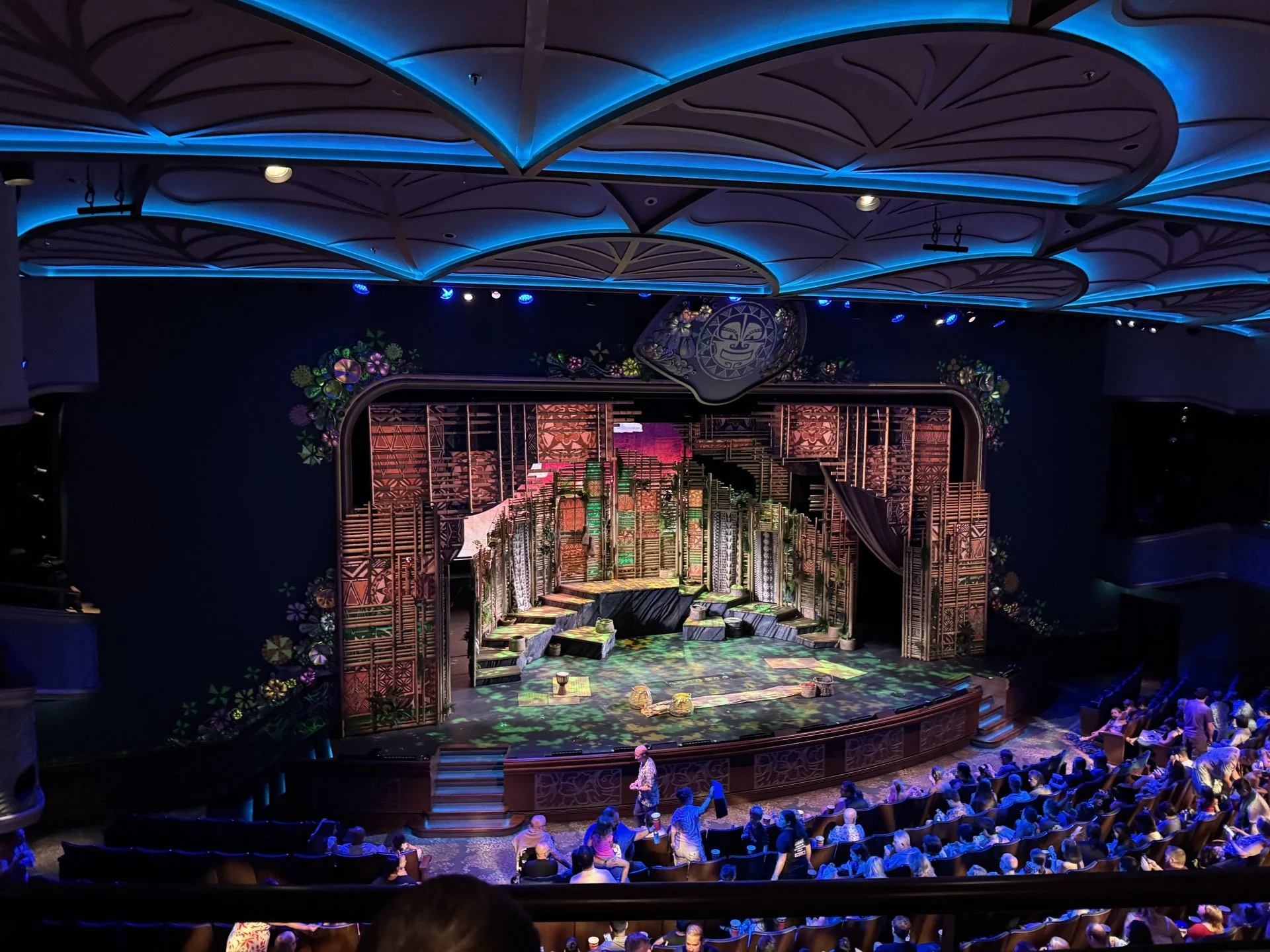
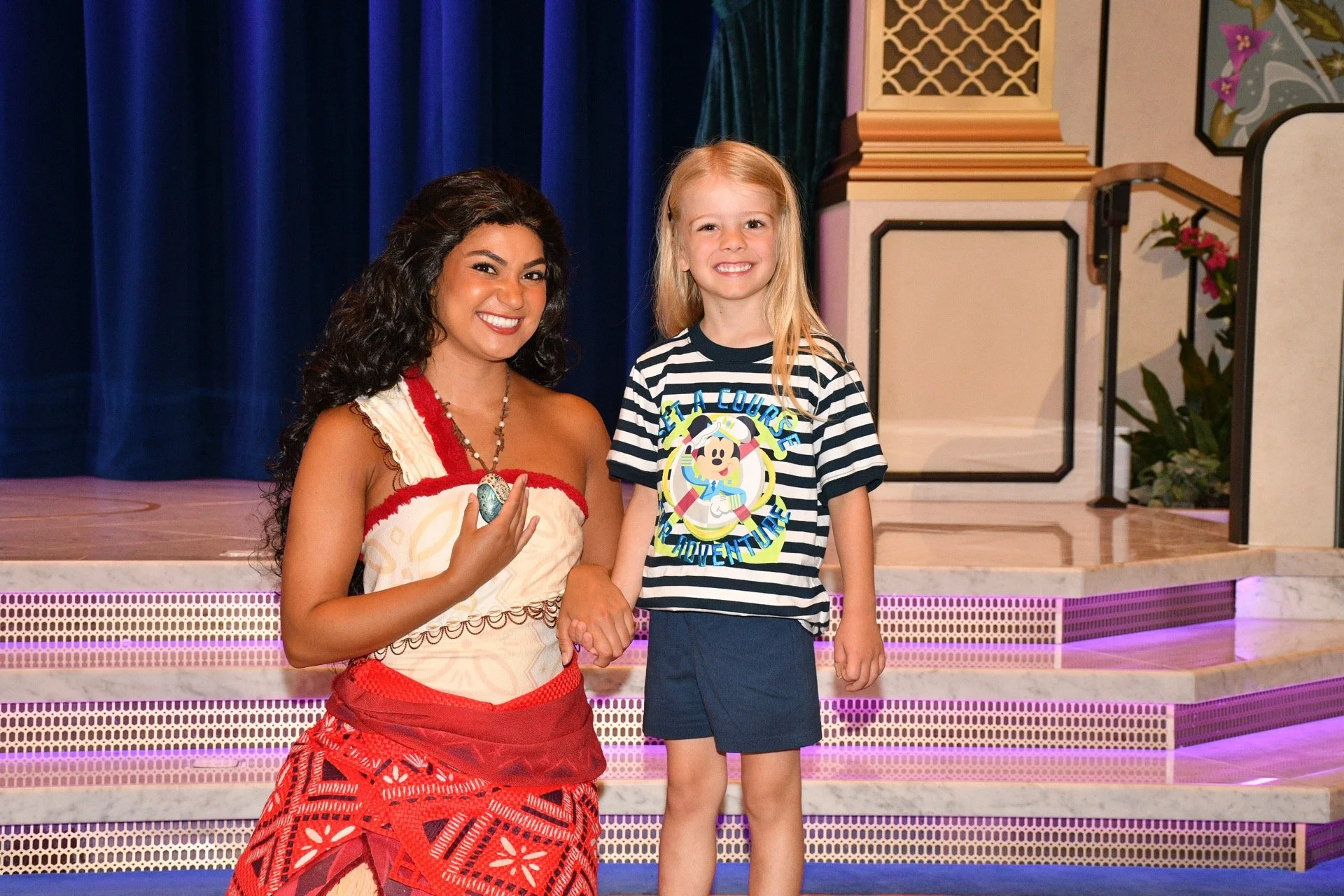
Disney The Tale of Moana
There were some shortcomings. I wasn’t impressed with Disney The Tale of Moana, and I felt like Mickey’s Color Spin Dance Party and Who's Behind the Curtain were both missed opportunities to actually engage guests.
Interestingly enough, those latter two suffered from opposing problems. Who’s Behind The Curtain had costumed characters appear on stage as part of an interactive show, in a Grand Hall practically begging for mingling, and then…they just left when the show ended. What a missed opportunity for greetings! Conversely, Mickey’s Color Spin Dance Party clearly wanted guests to be engaged and dancing, but for some reason it just couldn’t get them there—guests just stood and watched.
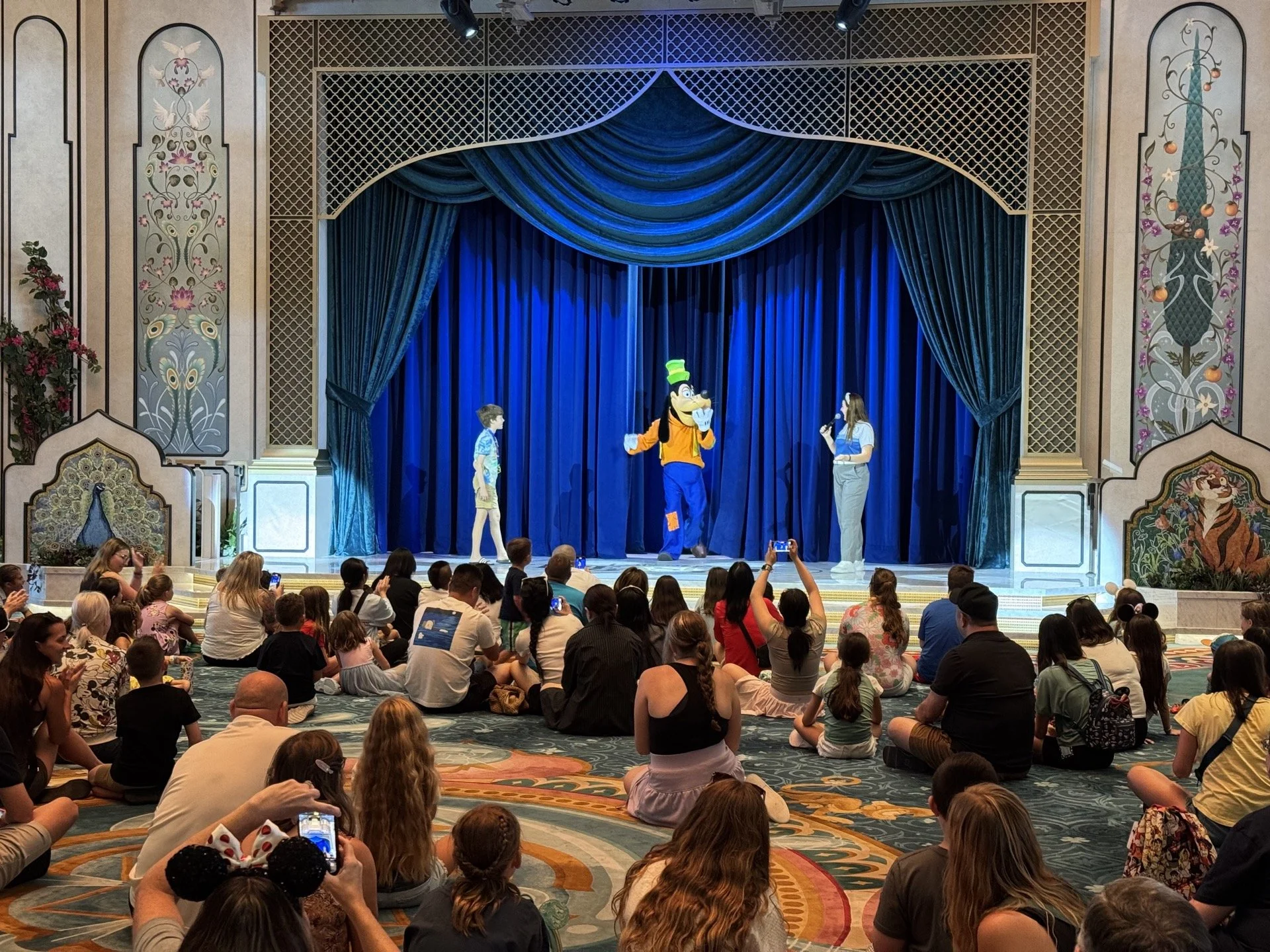
Who’s Behind The Curtain (look at all the space for mingling!)
But there was also just one massive problem that permeated entertainment at various levels—crowding. Skipper Society was constantly overflowing with guests for trivia, becoming standing room only.
This is a particularly bad problem for Skipper to have because it is in an “open” space of the ship—with hallways on either side. So the “standing room” is actually thoroughfare space other guests are trying to use.
As always, the feature stage shows drew enormous crowds. Matinees were added some days, which helped but didn’t resolve the issue fully. Sitting in Skipper I was just blown away by the lines for the Beauty and the Beast show (46 minutes before showtime!), and we wound up just skipping it rather than dealing with the stress.
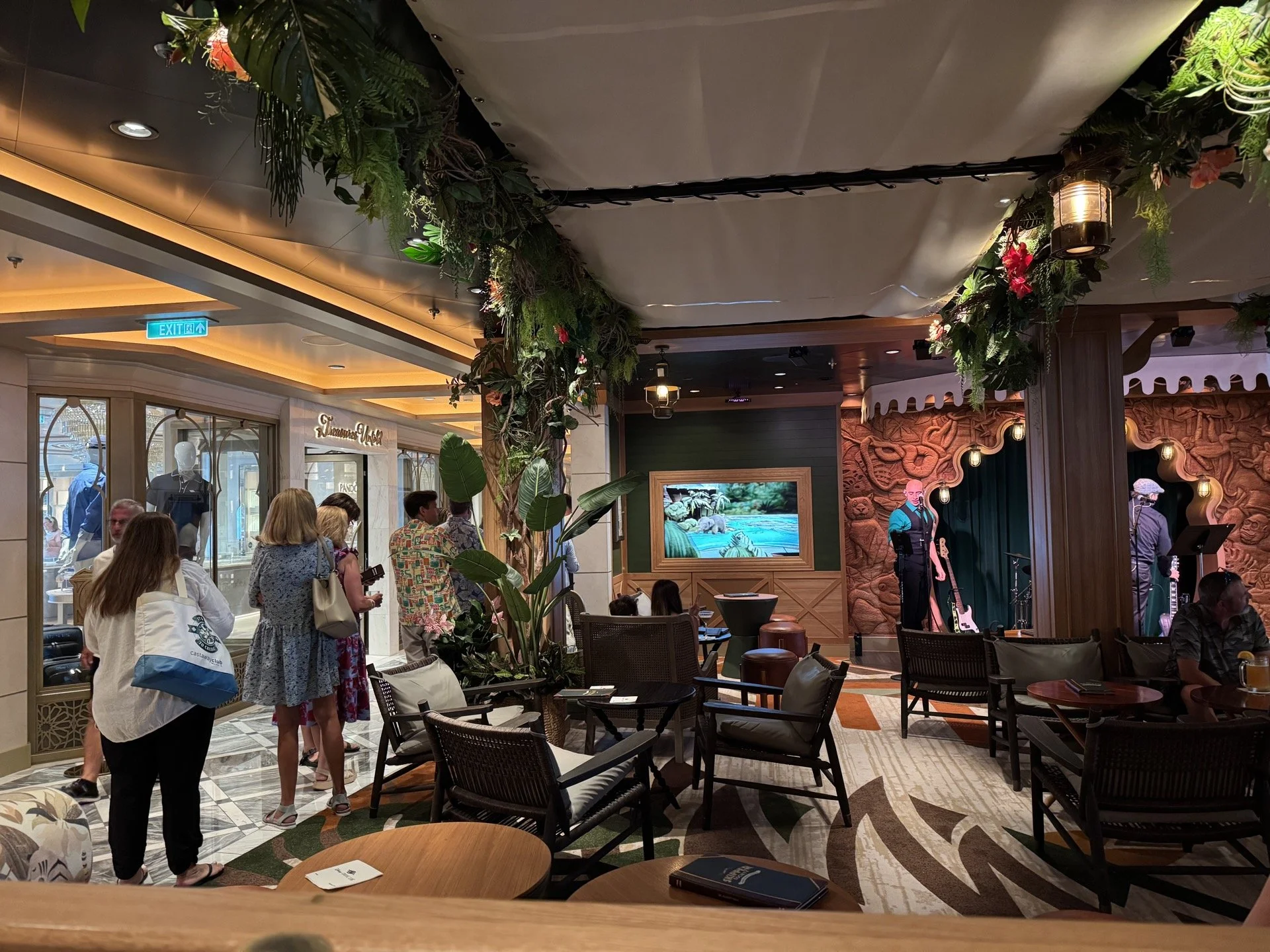
A long queue for a show has formed 46 minutes before showtime
The crowding for the shows was the complaint I heard most from other guests, and I heard it several times in completely random contexts (waiting in line for a drink at the bar, just chatting on the beach at Castaway Cay).
As I see it, this is a real point of failure for Disney. They control every aspect of this experience—how many people are on the ship, how many are scheduled for dinner at certain times, how many shows they run, how access to the theater is managed (it basically isn’t), and what days and times they run the shows.
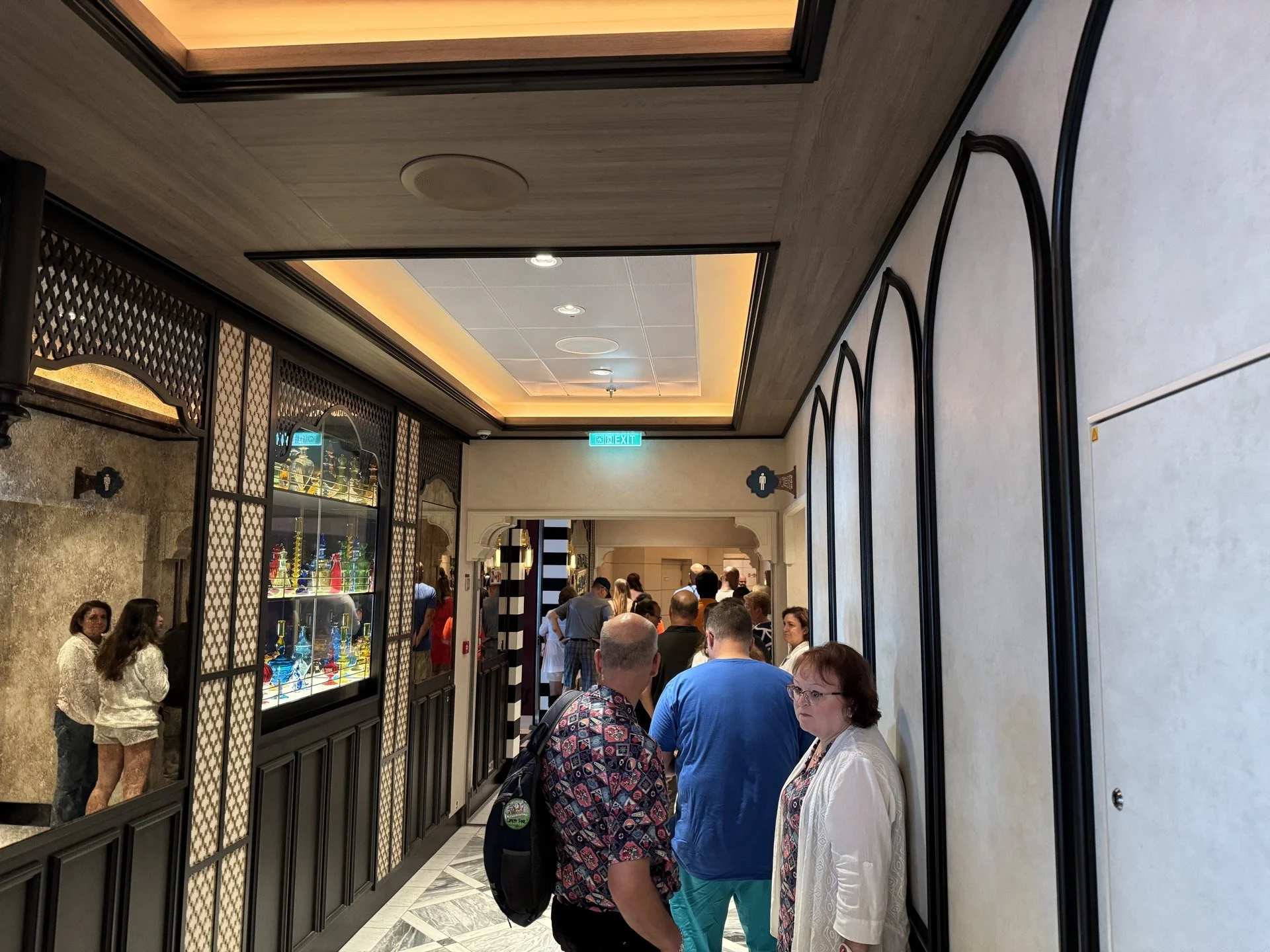
…and the queue reaches the Grand Hall
When you add in that this was a 7-night cruise, the issue becomes all the more problematic. While it’s probably true you can’t “fully” experience a Wish-class ship in just 3 nights, the ship and its hard product—aesthetic, bars, restaurants, pools, movie theaters—will not keep you sustained for 7 nights. A functioning entertainment schedule is necessary to keep guests refreshed.
The feature entertainment is part of the core hype for the Disney Cruise Line experience. It’s maybe appropriate for a guest to feel some stress about getting their pick of seats, but no guest should feel stress simply about seeing one of these shows.
Of course, at least one member of our party wasn’t too upset to miss a theatrical performance or two, and that’s the one with the understandably more juvenile tastes…
Letting The Kids Be Kids, Club or No Club
At 5 years old, Zoe is a pool-and-Funnel-Vision kid. Hero Zone, the indoor activity space with things like foosball and air hockey, was also a big hit for family time this trip.

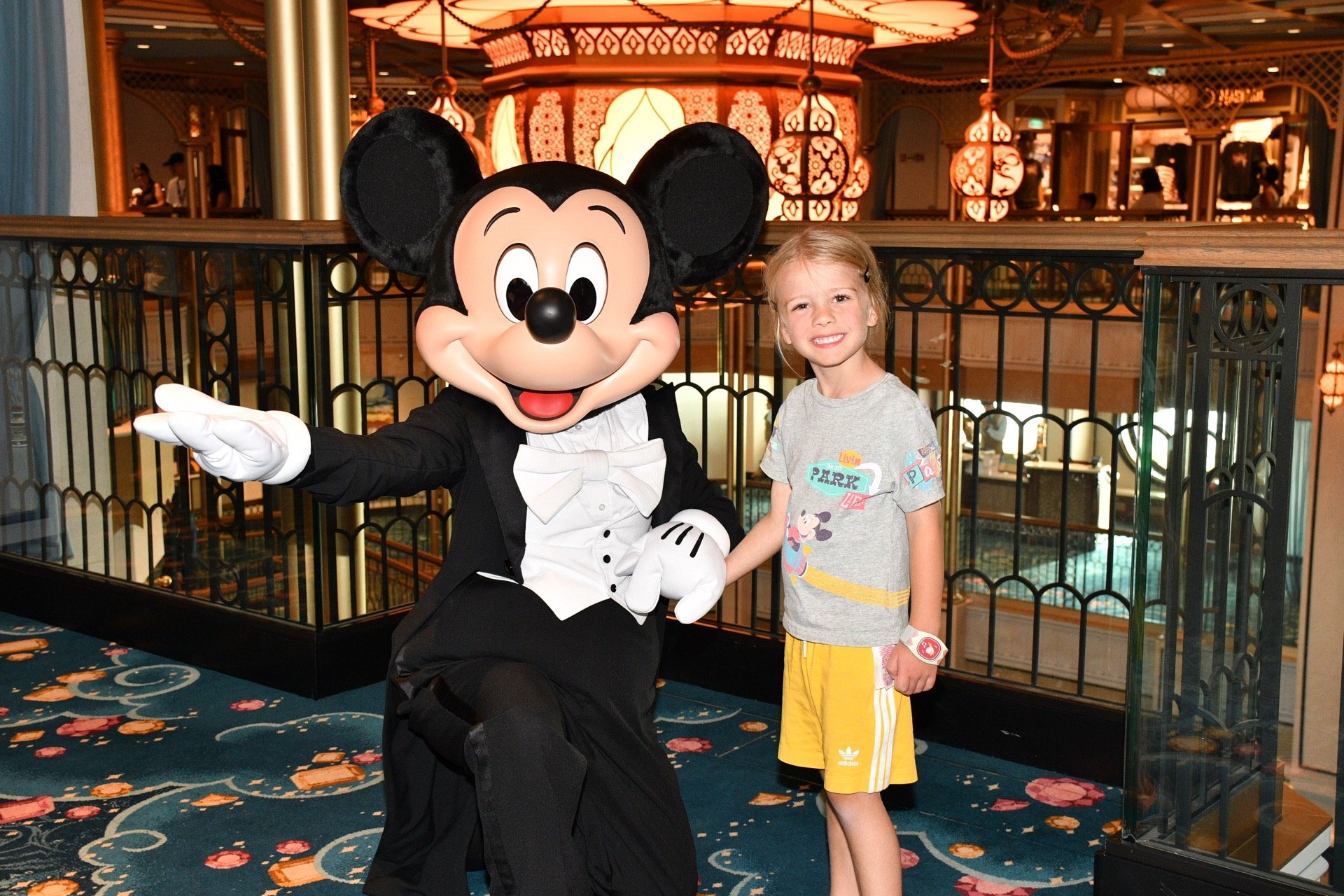
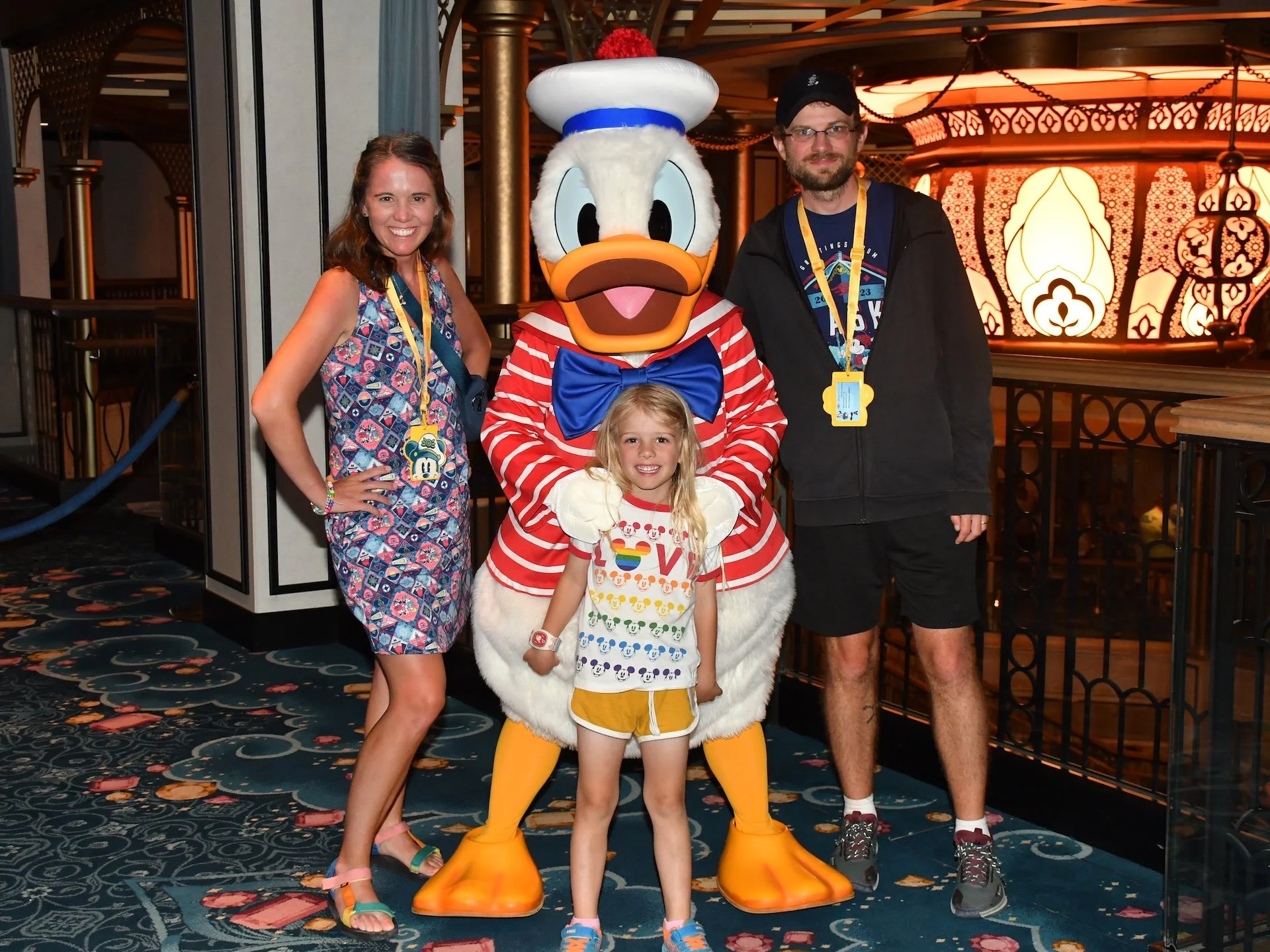
Character greetings are the most “uniquely Disney” thing that Zoe enjoys on cruises, and while we’re not character people in general, cruises are by far the time we meet the most characters.
As part of our overall Disney travel “portfolio”, if you will, the abundant character offerings on cruises take a lot of pressure off our park visits.
Otherwise…pools, foosball, movies—these are simple activities, and every. single. cruise. there’s a moment I think to myself, “Can’t we just set an iPad next to the bath tub and save some money?”
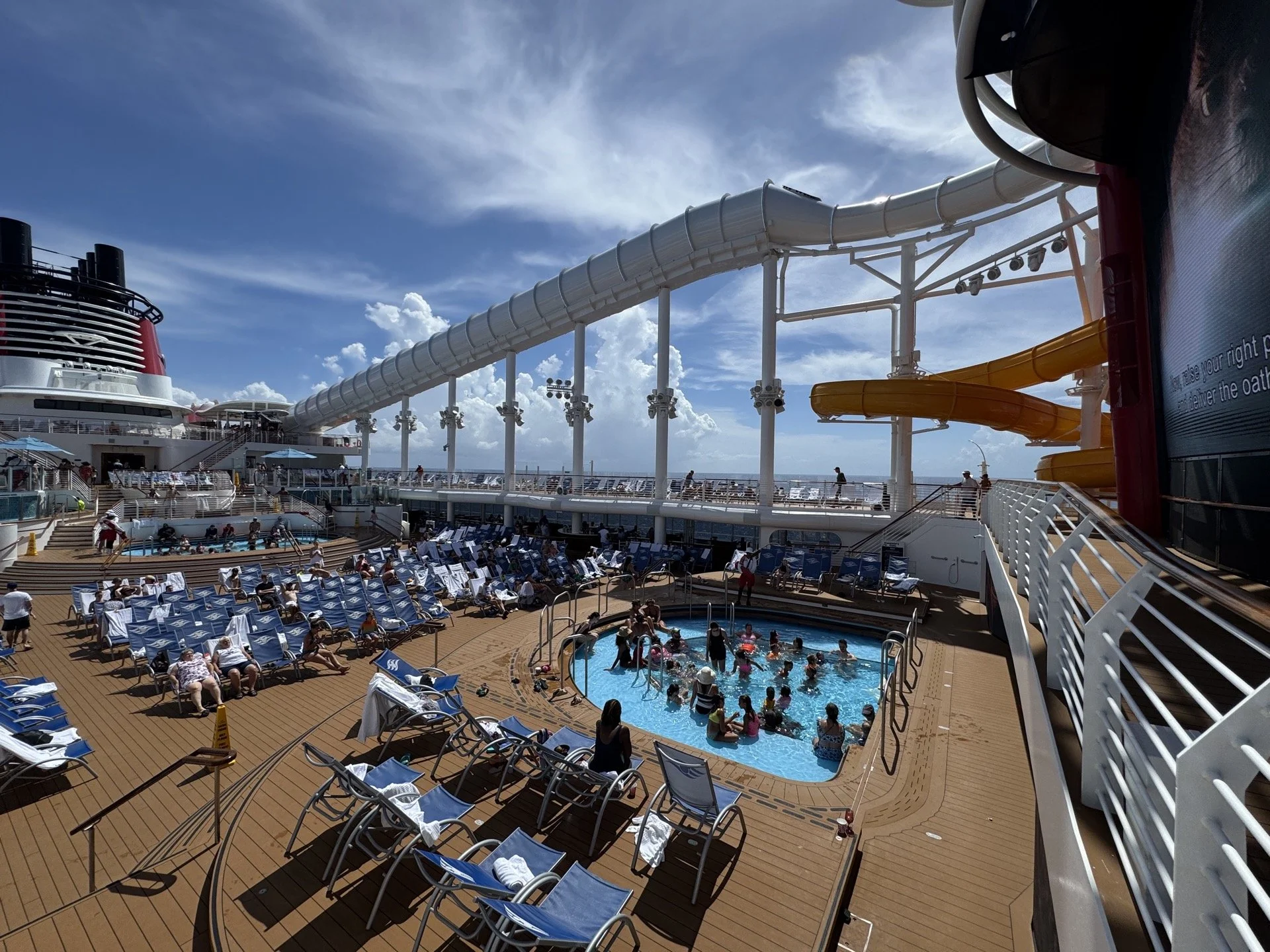
But I’ve recently come to understand that Disney cruises are Zoe’s purest vacations. We travel a lot, but daily hikes and European art museums and taking in Asian cityscapes aren’t this kid’s idea of a good time. Sure, we can watch movies and swim in pools near home, but that’s between the hours of reading and math we force into every free day. On a Disney cruise ship, I try to just let Zoe have Zoe’s choice of leisure time. And it’s usually not in the Oceaneer Club.
We’ve been through a lot with the Disney Cruise Line Kids Clubs. Our first cruise was on the Disney Wonder, and Zoe had a blast in the Kids Clubs. Then came the Wish, where the much-hyped Oceaneer Club failed to deliver for our family. The Treasure inherited the Wish’s Oceaneer Club almost exactly, so my feelings on it haven’t changed much.

My criticism of the Oceaneer Club on the Wish was partly driven by Zoe’s age. Disney Cruise Line had just implemented a policy of putting 3-and-4-year-old kids in their own supervised group. While this was a fleet-wide policy, I felt (and still feel) it reflected problems in the new Oceaneer Club: navigational complexity, older-kid demand for the best activities, and a reduced emphasis on centralized open spaces and activities.

Zoe has aged out of that group and, I admit, has aged out of some of the problems from the Wish. A 5-year-old generally has less difficulty navigating the complex space or working with a Cast Member to find some specific activity they’re interested in.
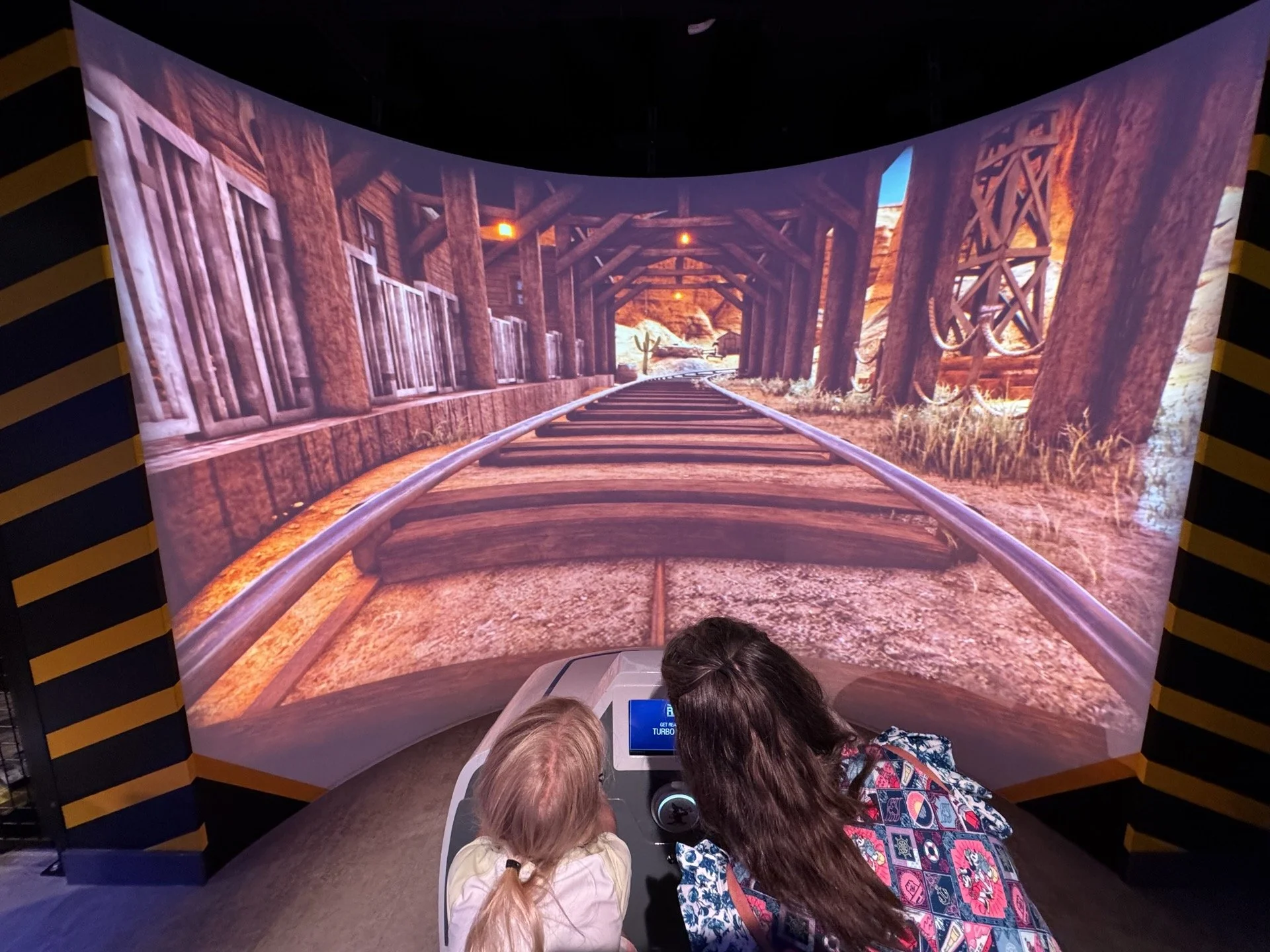
The high-demand video-game style activities—the roller coaster simulator and a Marvel game—are also a lot more accessible to a 5-year-old who is able to use them independently and assert themself to secure a place in the informal queue.
While I still take issue with the generally labyrinthine arrangement of the Oceaneer Club—Zoe still reported not being able to track down some activities, but also just didn’t care—the Club definitely functions better as kids get older.
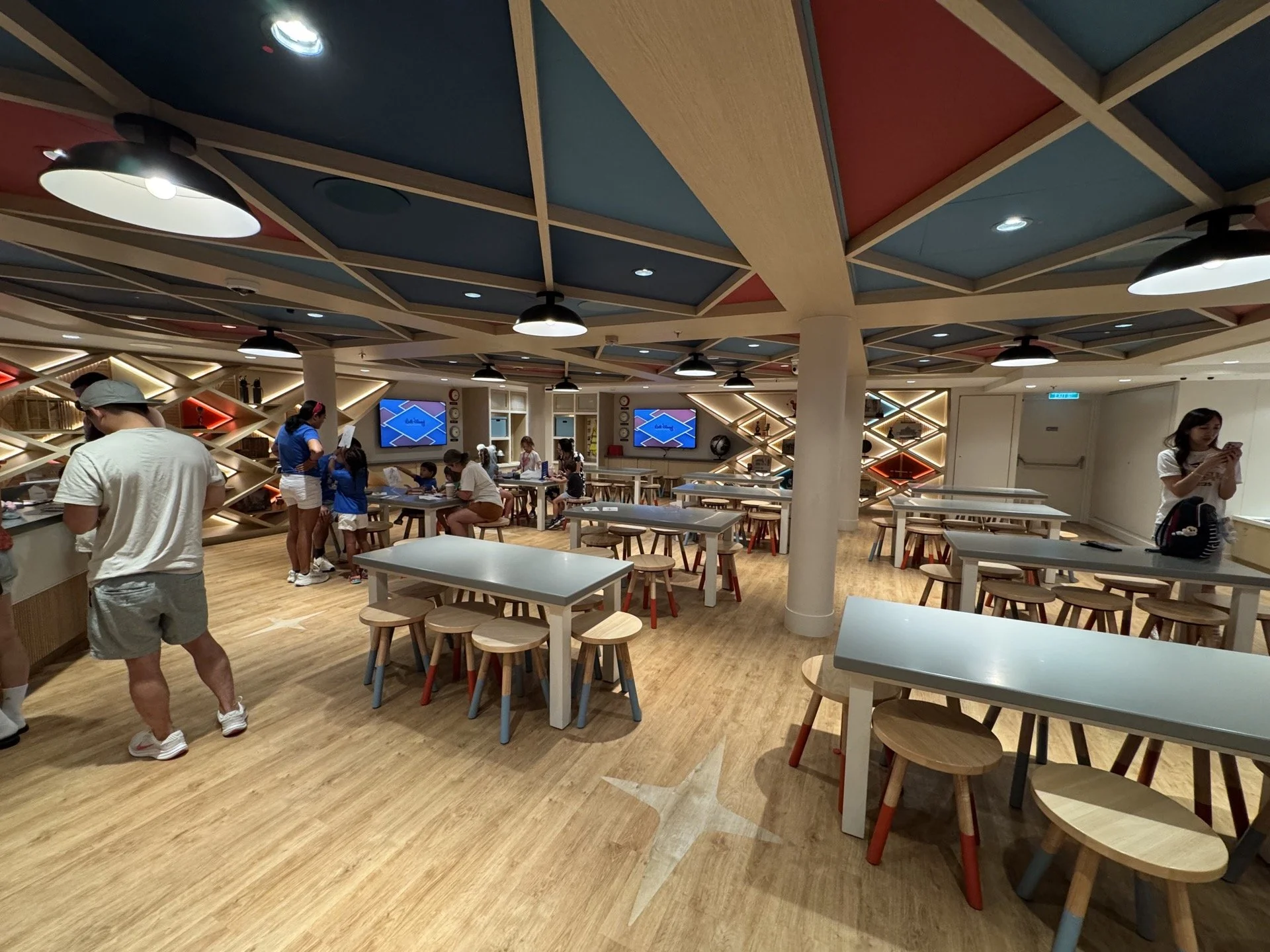
There were several games and activities that Zoe really enjoyed, and the schedule almost always had something worth considering. This was, ultimately, more than enough for us. I understand some parents would like their kids to live at the kids’ clubs during their trips, but that’s not something we need out of these trips.
I suspect that most kids, including Zoe, will sort of ebb and flow in their relationship with kids’ clubs as they age and their interests vary. What’s nice about the Treasure, and all Disney Cruise Line ships, is that the pools, family activities, and entertainment offer plenty for your kids even if they’re not into the kids’ club at the moment.
“Treasure Gonna Treasure”
So far I’ve focused on the big things. But our experience on the Treasure was unique in the number of small things that went wrong, so I have to give some time to those.
The consumer relationship with the entire Disney experiences division—including parks and cruises—is a give and take. It’s about accountability. Disney asks us consumers not only for a bunch of money, but also that we become experts in all things planning. Their side of the bargain is that they deliver the experience we invested our time and money in.
This is a bargain that Disney has chosen to make. It’s something they agree to every time they charge twice as much as any other cruise line. It’s naive to think you’re paying just to see Mickey Mouse or whatever other Disney-owned IP is on the ship. You’re paying for the so-called “Disney Difference.”
I mention this because I feel like the Disney Treasure was pretty lax on the finer details of this bargain. There were a host of operational shortcomings that I’d rather not have noticed. It’s not that these are gigantic—it’s that at the price Disney charges, and at the level of experience they’re advertising, these things just shouldn’t happen.

Here’s an incomplete list of some operational fails during our seven days on the ship:
Water coaster was inoperable 1-2 days
Bar didn’t have all beers on embarkation day
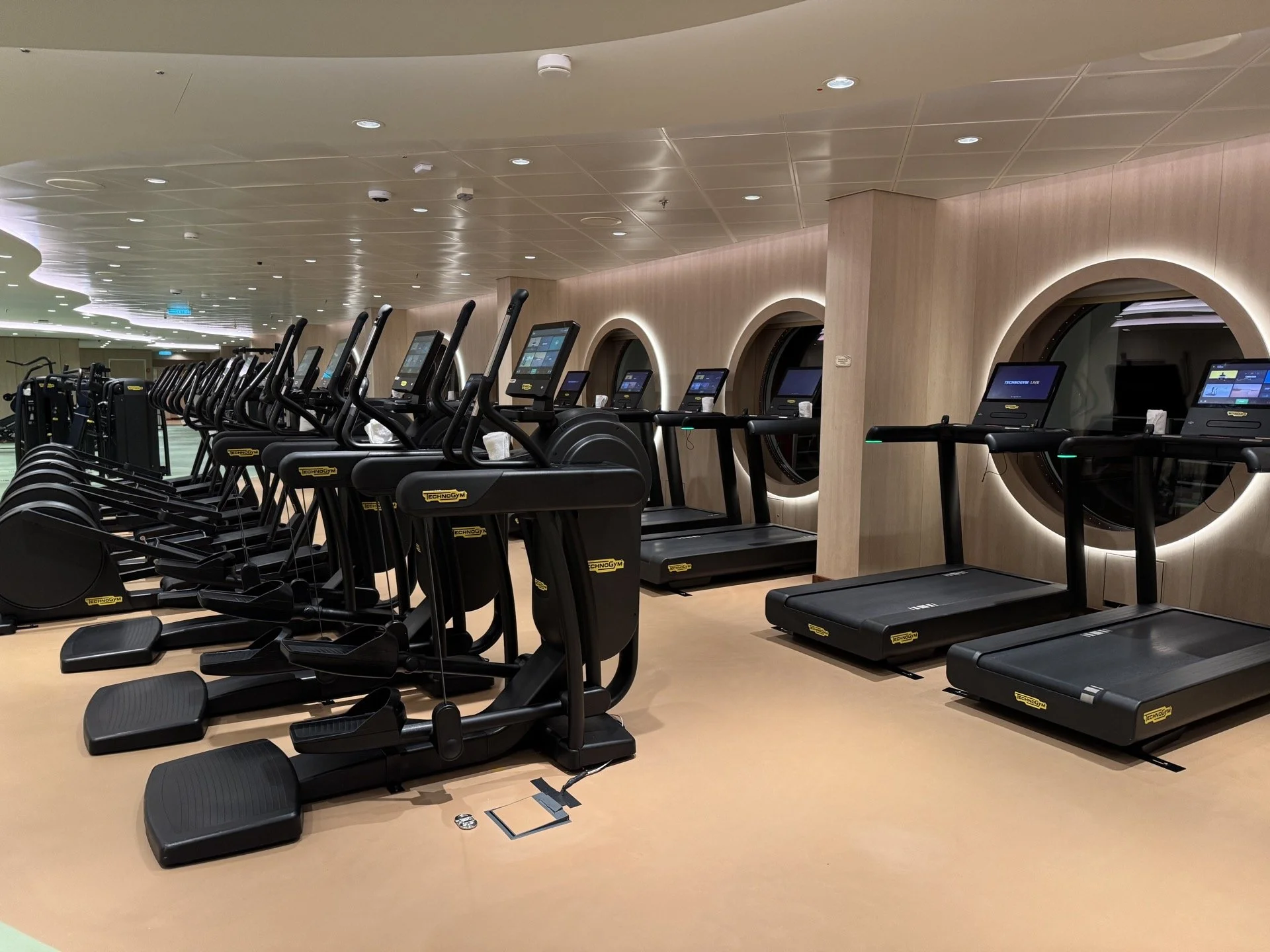
Fitness Center opened late multiple times
Hero Zone opened 15 minutes late one morning
Pirate's Rockin' Parlay Party started late
The Crew Member at Edge didn’t know the open house hours and had ended them earlier
Crew yelled “fill in all available space” at Royal Gathering until our compliance resulted in us being cut by people who were earnestly also just trying to comply
Multiple microphones broke during activities
Crew argued in front of guests about the proper protocol for requesting tables at the start of an activity
Majority Minds started 10 minutes late, partly because of broken door
Characters at Adventure Tea (paid extra) had inconsistent photo rules
Villains Game Night started late and the audio didn’t work at the start
Our server disappeared for a night with no explanation (she was replaced, of course, but this resulted in the various roles being switched around without anyone ever acknowledging this)
Multiple character greetings started late
Lines for shows filled the halls by about 30-45 minutes before showtime
Marceline Market ran out of spoons at debarkation breakfast
Scat Cat lost its main bartender for several minutes while I was there, leading to other guests (not me) waiting 10+ minutes for drinks
Again, these are mostly small things. Most of them aren’t big enough to seriously impact a trip, but I’d say the issue with the queues for the major shows is pretty significant.
It would be fair to assume that something starting 5 or even 15 minutes late isn’t even notable. And I’m not personally a stickler for being on time in general.
The problem is that so much of the Disney Treasure experience depends on fitting in your desired activities, and there isn’t always much of a gap between these things. For major character greetings, arriving 5 minutes later can mean you miss out on the greeting altogether.
Collectively, over a week, these small things got to the point where Emily and I would just joke “Treasure gonna Treasure.” I’m not the only reviewer to note being rubbed the wrong way by some parts of the Treasure, either.
On the one hand, as a reviewer, it’s part of my job to have my eyes open for these things. I doubt anyone else in the not-small group of us waiting for the Fitness Center to open got home and told their family “it was a fantastic cruise but some mornings the Fitness Center opened a few minutes late.”
On the other hand, I wasn’t seeking out these quibbles. An ordinary guest who waited for the Fitness Center to open, and then saw a broken microphone at an event, and then saw Crew Members arguing about tables might also feel this experience had more quirks than expected.
Conclusion
From a practical planning standpoint, when it comes time to plan your Disney cruise and pick your ship, Disney has done a lot for you with their itinerary calendar.
The Disney Treasure is currently a longer alternative to the Disney Wish—same class ships out of the same port (Port Canaveral). When the Wish moves to Europe in 2027, the Treasure will be the only Wish class ship at Port Canaveral (pending the debut of the Believe).
And overall, that’s okay. While I think the Treasure made some key improvements on the Wish’s design, the most significant are aesthetic—relevant for a critical eye or a design eye, but less significant for a family most focused on the Disney “experience.” The ships are similar enough that I’d never consider it essential to be on one over the other.
For what it’s worth, you wouldn’t be unreasonable to consider Haunted Mansion Parlor a must-have. If it is, but you’re not sold on the Treasure’s itineraries, consider the Destiny out of Fort Lauderdale—it also has Haunted Mansion Parlor.
Niche complaints about promenade design and bars with patio doors aside, the complaint I’ve seen most about the Wish is that people didn’t feel like they had enough time to experience it on short itineraries. Well, the Treasure offers you the option to experience a similar ship on a longer itinerary—but we’ve seen why that isn’t always good.
Over longer itineraries, more operational flaws have time to show. Entertainment shortcomings that you might write off on a shorter itinerary (“three Broadway style shows over three nights can’t be easy to organize”) become inexcusable at the length—and price—of a 7-night itinerary.
As reflected in what I said about cruises being Zoe’s purest vacations—cruises are the most escapist of vacations. They are the quintessential form of leisure travel. And when I look at everything I’ve said, there’s very little to complain about from that perspective—the Treasure is an excellent boat to sit on for a week.
But this cruise cost $7,410 before all the day-to-day expenses, flights, transportation, and pre-/post-cruise hotel stays. And it was on a Disney Cruise Line ship—that has to stand for something, it has to call for a truly special experience.
The loyal reader of the newsletter knows I’ve recently finished Marcus Buckingham’s Design Love In, which includes effusive praise of Disney and Josh D’Amaro specifically for understanding how to design experiences that people love.
It’s critical that guests not only like the experience. They must love it. As Josh himself disapprovingly said about Millennium Falcon: Smugglers Run, “Guests like it, but they don’t love it.”
I liked the Disney Treasure. But I didn’t love it.